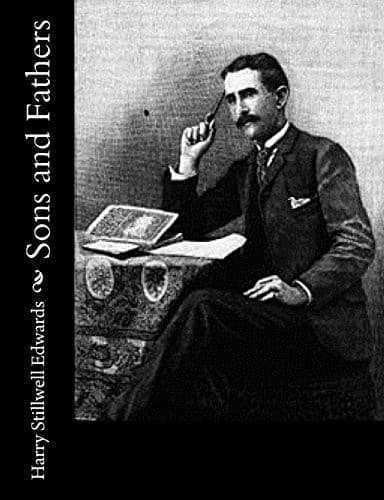
Mystery fiction; Race relations -- Fiction; Southern States -- Fiction
"Too late. Too late. Never, never, never too late. Who says there can be
a 'too late' for the immortal mind? I will begin. I will labor! I will
succeed! If not in this life, then in the next, or the next; aye, at the
foot of Buddha, if need be, I will press to read all to the strains of
music. Oh, blind! Blind! Blind!" He strode about the room in an ecstasy
of excitement.
"Prove to me it is too late here," shrieked the unhappy being, "and I
will end this existence; will go back a thousand cycles, if necessary,
carrying with me the impression of this truth, and begin, an infant, to
lisp in numbers."
He had snatched a poniard from the wall and was gesticulating
frantically. Edward was about to speak when he saw the enthusiast's eyes
lose their frenzy and fix upon the woman's. He dropped the weapon and
plunged face downward in despair among the pillows. Like a statue the
woman stood gazing upon him.
"My violin," said Edward. She disappeared noiselessly.
CHAPTER VII.
"BACK! WOULD YOU MURDER HER?"
When Edward Morgan went to Europe from Columbia college it was in
obedience to a mandate of John Morgan through the New York lawyers. He
went, began there the life of a bohemian. Introduced by a chance
acquaintance, he fell in first with the art circles of Paris, and,
having a fancy and decided talent for painting, he betook himself
seriously to study. But the same shadow, the same need of an
overpowering motive, pursued him. With hope and ambition he might have
become known to fame. As it was, his mind drifted into subtleties and
the demon change came again. He closed his easel. Rome, Athens,
Constantinople, the occident, all knew him, gave him brief welcome and
quick farewells.
The years were passing; as he had gone from idleness to art, from art to
history, and from history to archaeology by easy steps, so he passed
now, successively to religion, to philosophy, and to its last broad
exponent, theosophy.
The severity of this last creed fitted the crucifixion of his spirit.
Its contemplation showed him vacancies in his education and so he went
to Jena for additional study. This decision was reached mainly through
the suggestion of a chance acquaintance named Abingdon, who had come
into his life during his first summer on the continent. They met so
often that the face of this man had became familiar, and one day, glad
to hear his native tongue, he addressed him and was not repelled.
Abingdon gave to Edward Morgan his confidence; it was not important; a
barrister in an English interior town, he crossed the channel annually
for ramble in the by-ways of Europe. It had been his unbroken habit for
many years.
Public-domain text, read in full here on John Shaqi.
Reviews
Reviews
No reviews yet
Be the first to share your thoughts on this work.
Join the Discussion
Join the discussion
Sign in to leave a comment or review.
Sign InorCreate an account