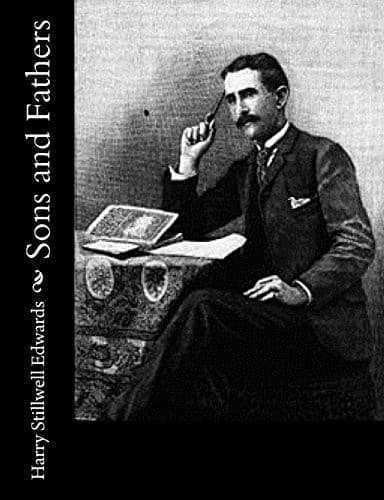
Mystery fiction; Race relations -- Fiction; Southern States -- Fiction
The figure of the man was not complete from the waist down; his face was
concealed. Between them, as they contended, was a child's coffin in the
arms of the woman. Overhead were the bare outlines of an arch.
The artist hesitated and added behind the group a tree, whose branches
seemed to lash the ground. And there memory failed; the crayon fell from
his fingers; he stood listless by the canvas. Then with a cry he buried
his face in his hands and wept.
As he stood thus, the visitor, awed but triumphant, glided through the
door and disappeared in the wing-room. He knew that he had touched a
hidden chord; that the picture on the canvas was born under the
flashlight of memory! Was it brain? Oh, for the wisdom of Virdow!
Sympathy moved him to return again to the glass-room. It was empty!
CHAPTER VIII.
ON THE BACK TRAIL.
Edward found himself next day feverish and mentally disturbed; but he
felt new life in the morning air. There was a vehicle available; a roomy
buggy, after the fashion of those chosen by physicians, with covered
tops to keep out the sun, and rubber aprons for the rain. And there was
a good reliable horse, that had traveled the city road almost daily for
ten years.
He finished his meal and started out. In the yard he found Gerald pale
and with the contracted pupils that betrayed his deadly habit. He was
taking views with a camera and came forward with breathless interest.
"I am trying some experiments with photographs on the line of our
conversation," he said. "If the mind pictures can be revived they must
necessarily exist. Do they? The question with me now is, can any living
substance retain a photographic impression? You understand, it seems
that the brain can receive these impressions through certain senses, but
the brain is transient; through a peculiar process of supply and waste
it is always coming and going. If it is true that every atom of our
physical bodies undergoes a change at least once in seven years, how can
the impressions survive? I have here upon my plate the sensitized film
of a fish's eyes; I caught it this morning. I must establish, first, the
proposition that a living substance can receive a photographic image; if
I can make an impression remain upon this film I have gained a little
point--a little one. But the fish should be alive. There are almost
insuperable difficulties, you understand! The time will come when a new
light will be made, so powerful, penetrating as to illumine solids.
Then, perhaps, will the brain be seen at work through the skull; then
may its tiny impressions even be found and enlarged; then will the past
give up its secrets. And the eye is not the brain." He looked away in
perplexity. "If I only had brain substance, brain substance--a living
brain!" He hurried away and Edward resumed his journey to the city, sad
and thoughtful.
Public-domain text, read in full here on John Shaqi.
Reviews
Reviews
No reviews yet
Be the first to share your thoughts on this work.
Join the Discussion
Join the discussion
Sign in to leave a comment or review.
Sign InorCreate an account