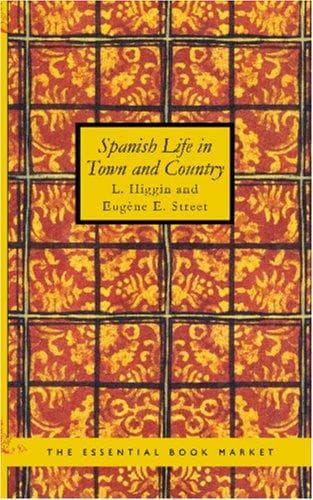
Portugal -- Social life and customs; Spain -- Social life and customs
No nation in the world is more innately democratic than Spain--none,
perhaps, so attached to monarchy; but one lesson has been learned,
probably alike by King and people--that absolutism is dead and buried
beyond recall. The ruler of Spain, to-day and in the future, must
represent the wishes of the people; and if at any time the two should
once more come into sharp collision, it is not the united people of this
once-divided country that would give way. For the rest, so long as the
monarch reigns constitutionally, and respects the rights and the desires
of his people, there is absolutely nothing to fear from pretender or
republican. At a recent political meeting in Madrid, for the first time,
were seen democrats, republicans, and monarchists united; amidst a
goodly quantity of somewhat "tall" talk, two notable remarks were
received with acclamation by all parties: one was that Italy had found
freedom, and had made herself into a united nationality, under a
constitutional monarch; and the other, that between the Government of
England and a republic there was no difference except in name--that in
all Europe there was no country so democratic or so absolutely free as
England under her King, nor one in which the people so entirely governed
themselves.
Among the many mistaken ideas which obtain currency in England with
regard to Spain, perhaps none is more common or more baseless than the
fiction about Don Carlos and his chances of success. A certain small
class of journalists from time to time write ridiculous articles in
English papers and magazines about what they are pleased to call the
"legitimatist" cause, and announce its coming triumph in the Peninsula.
No Spaniard takes the trouble to notice these remarkable productions of
the fertile journalistic brain of a foreigner. There are still, of
course, people calling themselves Carlists--notably the Duke of Madrid
and Don Jaime, but the cult, such as there is of it in Spain, is of the
"Platonic" order only,--to use the Spanish description of it, "a little
talk but no fight,"--and it may be classed with the vagaries of the
amiable people in England who amuse themselves by wearing a white rose,
and also call themselves "legitimatists," praying for the restoration of
the Stuarts.
The truth about the Carlist pretension is so little known in England
that it may be well to state it. Spain has never been a land of the
Salic Law; the story of her reigning queens--chief of all, Isabel la
Católica, shows this. It was not until the time of Philip V., the first
of the Bourbons, that this absolute monarch limited the succession to
heirs male by "pragmatic sanction"; that is to say, by his own
unsupported order. The Act in itself was irregular; it was never put
before the Cortes, and the Council of Castile protested against it at
the time.
[Illustration: A CORNER IN OLD MADRID]
Public-domain text, read in full here on John Shaqi.
Reviews
Reviews
No reviews yet
Be the first to share your thoughts on this work.
Join the Discussion
Join the discussion
Sign in to leave a comment or review.
Sign InorCreate an account