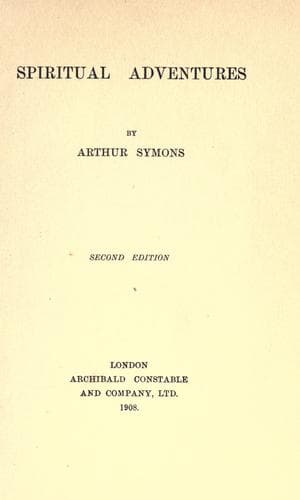
Great Britain -- Social life and customs -- 19th century -- Fiction; Short stories
Her father she but rarely saw; but it was her father whom she
worshipped, whom she was taught to worship. The whole house, she, her
mother, and Linda, the servant, who was more friend than servant (for
she took no wages, and when she wanted anything, asked for it), all
existed for the sake of that wonderful, impracticable father of hers; it
was for him they starved, it was to him they looked for the great future
which they believed in so implicitly, but scarcely knew in what shape to
look for. She knew that he had come of gentlefolk, in another county,
that he had been meant for the Church, and, after some vague misfortune
at Cambridge, had married her mother, who was but seventeen, and of a
class beneath him, against the will of his relations, who had cast him
off just as, at twenty-one, he had come into a meagre allowance from the
will of his grandfather. He had been the last of eleven children, born
when his mother was fifty years of age, and he had inherited the
listless temperament of a dwindling stock. He had never been able to do
anything seriously, or even to make up his mind quite what great thing
he was going to do. First he had found a small clerkship, then he had
dropped casually upon the post which he was to hold almost to the time
of his death, as secretary to some Assurance Society, whose money it was
his business to collect. He did the work mechanically; at first,
competently enough; but his heart was in other things. Lucy was never
sure whether it was the great picture he was engaged upon, or the great
book, that was to make all the difference in their fortunes. She never
doubted his power to do anything he liked; and it was one of her
privileges sometimes to be allowed to sit in his room (the sitting-room
on the left of the door, where it was always warmer and more comfortable
than anywhere else in the house), watching him at his paints or his
manuscripts, with great serious eyes that sometimes seemed to disquiet
him a little; and then she would be told to run away and not worry
mother.
The little mother, too, she saw less of than children mostly see of
their mothers; for her mother was never quite well, and she would so
often be told: 'You must be quiet now, and not go into your mother's
room, for she has one of her headaches,' that she gradually accustomed
herself to do without anybody's company, and then she would sit all
alone, or with her doll, who was called Arabella, to whom she would
chatter for hours together, in a low and familiar voice, making all
manner of confidences to her, and telling her all manner of stories.
Sometimes she would talk to Linda instead, sitting on the corner of the
kitchen fender; but Linda was not so good a listener, and she had a way
of going into the scullery, and turning on a noisy stream of water, just
at what ought to have been the most absorbing moment of the narrative.
Public-domain text, read in full here on John Shaqi.
Reviews
Reviews
No reviews yet
Be the first to share your thoughts on this work.
Join the Discussion
Join the discussion
Sign in to leave a comment or review.
Sign InorCreate an account