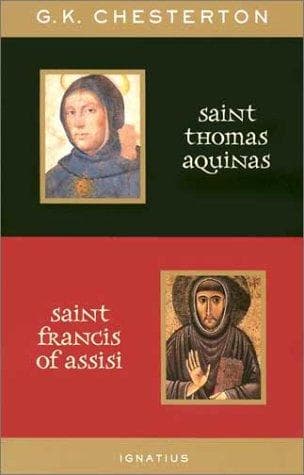
St. Francis of AssisiChesterton, G. K. (Gilbert Keith)
Religion
St. Francis of Assisi
Chesterton, G. K. (Gilbert Keith)
Francis, of Assisi, Saint, 1182-1226
The two men who have the credit, apparently, of having first perceived
something of what was happening in the world of the soul were a solid
and wealthy citizen named Bernard of Quintavalle and a canon from a
neighbouring church named Peter. It is the more to their credit because
Francis, if one may put it so, was by this time wallowing in poverty and
association with lepers and ragged mendicants; and these two were men
with much to give up; the one of comforts in the world and the other of
ambition in the Church. Bernard the rich burgher did quite literally and
finally sell all he had and give to the poor. Peter did even more; for
he descended from a chair of spiritual authority, probably when he was
already a man of mature years and therefore of fixed mental habits, to
follow an extravagant young eccentric whom most people probably regarded
as a maniac. What it was of which they had caught a glimpse, of which
Francis had seen the glory, may be suggested later so far as it can be
suggested at all. At this stage we need profess to see no more than all
Assisi saw, and that something not altogether unworthy of comment. The
citizens of Assisi only saw the camel go in triumph through the eye of
the needle and God doing impossible things because to him all things
were possible; only a priest who rent his robes like the Publican and
not like the Pharisee and a rich man who went away joyful, for he had no
possessions.
These three strange figures are said to have built themselves a sort of
hut or den adjoining the leper hospital. There they talked to each
other, in the intervals of drudgery and danger (for it needed ten times
more courage to look after a leper than to fight for the crown of
Sicily), in the terms of their new life, almost like children talking a
secret language. Of these individual elements on their first friendship
we can say little with certainty; but it is certain that they remained
friends to the end. Bernard of Quintavalle occupies in the story
something of the position of Sir Bedivere, "first made and latest left
of Arthur's knights," for he reappears again at the right hand of the
saint on his death-bed and receives some sort of special blessing. But
all those things belong to another historical world and were quite
remote from the ragged and fantastic trio in their tumble-down hut. They
were not monks except perhaps in the most literal and archaic sense
which was identical with hermits. They were, so to speak, three
solitaries living together socially, but not as a society. The whole
thing seems to have been intensely individual, as seen from the outside
doubtless individual to the point of insanity. The stir of something
that had in it the promise of a movement or a mission can first be felt
as I have said in the affair of the appeal to the New Testament.
Public-domain text, read in full here on John Shaqi.
Reviews
Reviews
No reviews yet
Be the first to share your thoughts on this work.
Join the Discussion
Join the discussion
Sign in to leave a comment or review.
Sign InorCreate an account