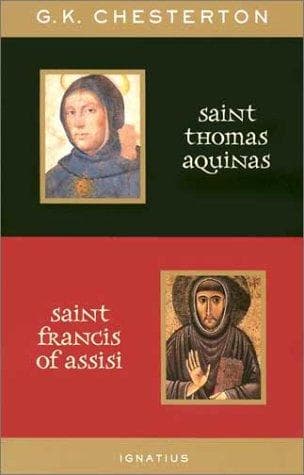
St. Francis of AssisiChesterton, G. K. (Gilbert Keith)
Religion
St. Francis of Assisi
Chesterton, G. K. (Gilbert Keith)
Francis, of Assisi, Saint, 1182-1226
fringes of our garments, the futile externals of our lives. One of the
Franciscans says later, "A monk should own nothing but his harp";
meaning, I suppose, that he should value nothing but his song, the song
with which it was his business as a minstrel to serenade every castle
and cottage, the song of the joy of the Creator in his creation and the
beauty of the brotherhood of men. In imagining the life of this sort of
visionary vagabond, we may already get a glimpse also of the practical
side of that asceticism which puzzles those who think themselves
practical. A man had to be thin to pass always through the bars and out
of the cage; he had to travel light in order to ride so fast and so far.
It was the whole calculation, so to speak, of that innocent cunning,
that the world was to be outflanked and outwitted by him, and be
embarrassed about what to do with him. You could not threaten to starve
a man who was ever striving to fast. You could not ruin him and reduce
him to beggary, for he was already a beggar. There was a very lukewarm
satisfaction even in beating him with a stick, when he only indulged in
little leaps and cries of joy because indignity was his only dignity.
You could not put his head in a halter without the risk of putting it in
a halo.
But one distinction between the old monks and the new friars counted
especially in the matter of practicality and especially of promptitude.
The old fraternities with their fixed habitations and enclosed existence
had the limitations of ordinary householders. However simply they lived
there must be a certain number of cells or a certain number of beds or
at least a certain cubic space for a certain number of brothers; their
numbers therefore depended on their land and building material. But
since a man could become a Franciscan by merely promising to take his
chance of eating berries in a lane or begging a crust from a kitchen, of
sleeping under a hedge or sitting patiently on a doorstep, there was no
economic reason why there should not be any number of such eccentric
enthusiasts within any short period of time. It must also be remembered
that the whole of this rapid development was full of a certain kind of
democratic optimism that really was part of the personal character of
St. Francis. His very asceticism was in one sense the height of
optimism. He demanded a great deal of human nature not because he
despised it but rather because he trusted it. He was expecting a very
great deal from the extraordinary men who followed him; but he was also
expecting a good deal from the ordinary men to whom he sent them. He
asked the laity for food as confidently as he asked the fraternity for
fasting. But he counted on the hospitality of humanity because he really
did regard every house as the house of a friend. He really did love and
honour ordinary men and ordinary things; indeed we may say that he only
sent out the extraordinary men to encourage men to be ordinary.
Public-domain text, read in full here on John Shaqi.
Reviews
Reviews
No reviews yet
Be the first to share your thoughts on this work.
Elsewhere in the archive
Join the Discussion
Join the discussion
Sign in to leave a comment or review.
Sign InorCreate an account