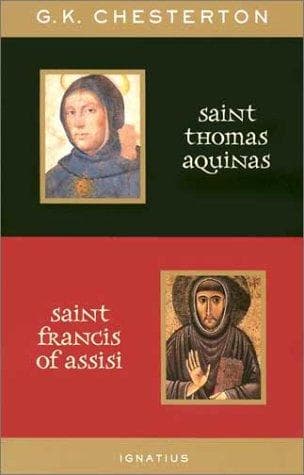
St. Francis of AssisiChesterton, G. K. (Gilbert Keith)
Religion
St. Francis of Assisi
Chesterton, G. K. (Gilbert Keith)
Francis, of Assisi, Saint, 1182-1226
But in fact his life did prove it, and that possibly in a more subtle
sense. There is, I fancy, some truth in the hint of one of his modern
biographers, that even his natural passions were singularly normal and
even noble, in the sense of turning towards things not unlawful in
themselves but only unlawful for him. Nobody ever lived of whom we could
less fitly use the word "regret" than Francis of Assisi. Though there
was much that was romantic, there was nothing in the least sentimental
about his mood. It was not melancholy enough for that. He was of far too
swift and rushing a temper to be troubled with doubts and
reconsiderations about the race he ran; though he had any amount of
self-reproach about not running faster. But it is true, one suspects,
that when he wrestled with the devil, as every man must to be worth
calling a man, the whispers referred mostly to those healthy instincts
that he would have approved for others; they bore no resemblance to that
ghastly painted paganism which sent its demoniac courtesans to plague
St. Anthony in the desert. If St. Francis had only pleased himself, it
would have been with simpler pleasures. He was moved to love rather than
lust, and by nothing wilder than wedding-bells. It is suggested in that
strange story of how he defied the devil by making images in the snow,
and crying out that these sufficed him for a wife and family. It is
suggested in the saying he used when disclaiming any security from sin,
"I may yet have children"; almost as if it was of the children rather
than the woman that he dreamed. And this, if it be true, gives a final
touch to the truth about his character. There was so much about him of
the spirit of the morning, so much that was curiously young and clean,
that even what was bad in him was good. As it was said of others that
the light in their body was darkness, so it may be said of this luminous
spirit that the very shadows in his soul were of light. Evil itself
could not come to him save in the form of a forbidden good; and he could
only be tempted by a sacrament.
_Chapter VIII_
_The Mirror of Christ_
Public-domain text, read in full here on John Shaqi.
Reviews
Reviews
No reviews yet
Be the first to share your thoughts on this work.
Elsewhere in the archive
Join the Discussion
Join the discussion
Sign in to leave a comment or review.
Sign InorCreate an account