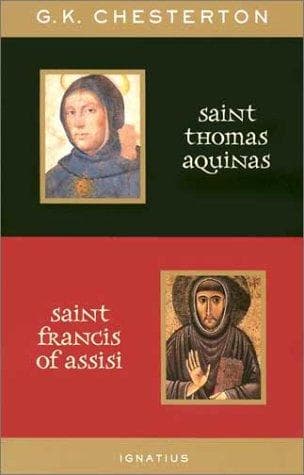
St. Francis of AssisiChesterton, G. K. (Gilbert Keith)
Religion
St. Francis of Assisi
Chesterton, G. K. (Gilbert Keith)
Francis, of Assisi, Saint, 1182-1226
After he had taken farewell of some of his nearest and especially some
of his oldest friends, he was lifted at his own request off his own rude
bed and laid on the bare ground; as some say clad only in a hair-shirt,
as he had first gone forth into the wintry woods from the presence of
his father. It was the final assertion of his great fixed idea; of
praise and thanks springing to their most towering height out of
nakedness and nothing. As he lay there we may be certain that his seared
and blinded eyes saw nothing but their object and their origin. We may
be sure that the soul, in its last inconceivable isolation, was face to
face with nothing less than God Incarnate and Christ Crucified. But for
the men standing around him there must have been other thoughts mingling
with these; and many memories must have gathered like ghosts in the
twilight, as that day wore on and that great darkness descended in which
we all lost a friend.
For what lay dying there was not Dominic of the Dogs of God, a leader in
logical and controversial wars that could be reduced to a plan and
handed on like a plan; a master of a machine of democratic discipline by
which others could organise themselves. What was passing from the world
was a person; a poet; an outlook on life like a light that was never
after on sea or land; a thing not to be replaced or repeated while the
earth endures. It has been said that there was only one Christian, who
died on the cross; it is truer to say in this sense that there was only
one Franciscan, whose name was Francis. Huge and happy as was the
popular work he left behind him, there was something that he could not
leave behind, any more than a landscape painter can leave his eyes in
his will. It was an artist in life who was here called to be an artist
in death; and he had a better right than Nero, his anti-type, to say
_Qualis artifex pereo_. For Nero's life was full of posing for the
occasion like that of an actor; while the Umbrian's had a natural and
continuous grace like that of an athlete. But St. Francis had better
things to say and better things to think about, and his thoughts were
caught upwards where we cannot follow them, in divine and dizzy heights
to which death alone can lift us up.
Public-domain text, read in full here on John Shaqi.
Reviews
Reviews
No reviews yet
Be the first to share your thoughts on this work.
Elsewhere in the archive
Join the Discussion
Join the discussion
Sign in to leave a comment or review.
Sign InorCreate an account