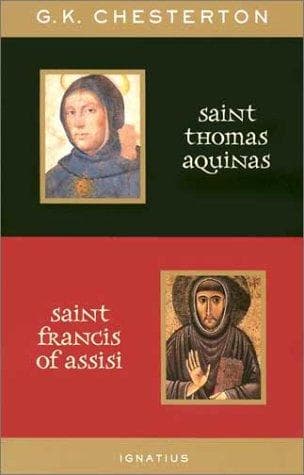
St. Francis of AssisiChesterton, G. K. (Gilbert Keith)
Religion
St. Francis of Assisi
Chesterton, G. K. (Gilbert Keith)
Francis, of Assisi, Saint, 1182-1226
This little book is an essay on St. Francis and not on the Franciscan
Order, still less on the Catholic Church or the Papacy or the policy
pursued towards the extreme Franciscans or the Fraticelli. It is
therefore only necessary to note in a very few words what was the
general nature of the controversy that raged after the great saint's
death, and to some extent troubled the last days of his life. The
dominant detail was the interpretation of the vow of poverty, or the
refusal of all possessions. Nobody so far as I know ever proposed to
interfere with the vow of the individual friar that he would have no
individual possessions. Nobody, that is, proposed to interfere with his
negation of private property. But some Franciscans, invoking the
authority of Francis on their side, went further than this and further I
think than anybody else has ever gone. They proposed to abolish not only
private property but property. That is, they refused to be corporately
responsible for anything at all; for any buildings or stores or tools;
they refused to own them collectively even when they used them
collectively. It is perfectly true that many, especially among the first
supporters of this view, were men of a splendid and selfless spirit,
wholly devoted to the great saint's ideal. It is also perfectly true
that the Pope and the authorities of the Church did not think this
conception was a workable arrangement, and went so far in modifying it
as to set aside certain clauses in the great saint's will. But it is not
at all easy to see that it _was_ a workable arrangement or even an
arrangement at all; for it was really a refusal to arrange anything.
Everybody knew of course that Franciscans were communists; but this was
not so much being a communist as being an anarchist. Surely upon any
argument somebody or something must be answerable for what happened to
or in or concerning a number of historic edifices and ordinary goods and
chattels. Many idealists of a socialistic sort, notably of the school of
Mr. Shaw or Mr. Wells, have treated this dispute as if it were merely a
case of the tyranny of wealthy and wicked pontiffs crushing the true
Christianity of Christian Socialists. But in truth this extreme ideal
was in a sense the very reverse of Socialist, or even social. Precisely
the thing which these enthusiasts refused was that social ownership on
which Socialism is built; what they primarily refused to do was what
Socialists primarily exist to do; to own legally in their corporate
capacity. Nor is it true that the tone of the Popes towards the
enthusiasts was merely harsh and hostile. The Pope maintained for a long
time a compromise which he had specially designed to meet their own
conscientious objections; a compromise by which the Papacy itself held
the property in a kind of trust for the owners who refused to touch it.
The truth is that this incident shows two things which are common enough
in Catholic history, but very little understood by the journalistic
Public-domain text, read in full here on John Shaqi.
Reviews
Reviews
No reviews yet
Be the first to share your thoughts on this work.
Elsewhere in the archive
Join the Discussion
Join the discussion
Sign in to leave a comment or review.
Sign InorCreate an account