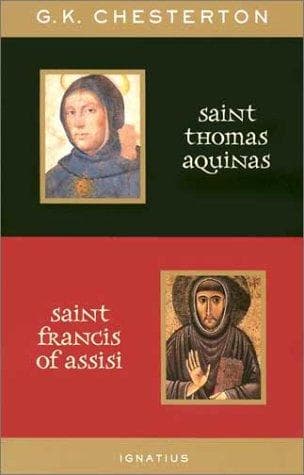
St. Francis of AssisiChesterton, G. K. (Gilbert Keith)
Religion
St. Francis of Assisi
Chesterton, G. K. (Gilbert Keith)
Francis, of Assisi, Saint, 1182-1226
There is one consideration which, though sufficiently clear in the whole
story, has not perhaps been sufficiently noted, especially by those who
cannot see the case for a certain Catholic common sense larger even than
Franciscan enthusiasm. Yet it arises out of the very merits of the man
whom they so rightly admire. Francis of Assisi, as has been said again
and again, was a poet; that is, he was a person who could express his
personality. Now it is everywhere the mark of this sort of man that his
very limitations make him larger. He is what he is, not only by what he
has, but in some degree by what he has not. But the limits that make the
lines of such a personal portrait cannot be made the limits of all
humanity. St. Francis is a very strong example of this quality in the
man of genius, that in him even what is negative is positive, because it
is part of a character. An excellent example of what I mean may be found
in his attitude towards learning and scholarship. He ignored and in some
degree discouraged books and book-learning; and from his own point of
view and that of his own work in the world he was absolutely right. The
whole point of his message was to be so simple that the village idiot
could understand it. The whole point of his point of view was that it
looked out freshly upon a fresh world, that might have been made that
morning. Save for the great primal things, the Creation and the Story of
Eden, the first Christmas and the first Easter, the world had no
history. But is it desired or desirable that the whole Catholic Church
should have no history?
Public-domain text, read in full here on John Shaqi.
Reviews
Reviews
No reviews yet
Be the first to share your thoughts on this work.
Elsewhere in the archive
Join the Discussion
Join the discussion
Sign in to leave a comment or review.
Sign InorCreate an account