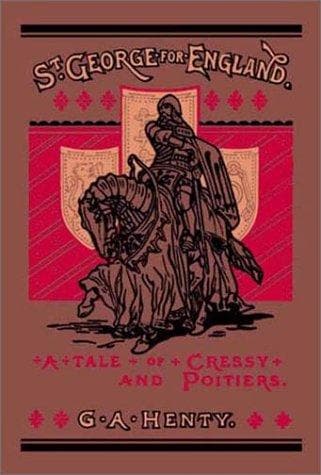
St. George for EnglandHenty, G. A. (George Alfred)
History
St. George for England
Henty, G. A. (George Alfred)
Great Britain -- History -- Edward III, 1327-1377 -- Fiction
The disorganization into which France had been thrown by the capture of
its king increased rather than diminished. Among all classes men strove
in the absence of a repressive power to gain advantages and privileges.
Serious riots occurred in many parts, and the demagogues of Paris,
headed by Stephen Marcel, and Robert le Coq, bishop of Leon, set at
defiance the Dauphin and the ministers and lieutenant of the king.
Massacre and violence stained the streets of Paris with blood. General
law, public order, and private security were all lost. Great bodies of
brigands devastated the country, and the whole of France was thrown into
confusion. So terrible was the disorder that the inhabitants of every
village were obliged to fortify the ends of their streets, and keep
watch and ward as in the cities. The proprietors of land on the banks of
rivers spent the night in boats moored in the middle of the stream, and
in every house and castle throughout the land men remained armed as if
against instant attack.
Then arose the terrible insurrection known as the Jacquerie. For
centuries the peasantry of France had suffered under a bondage to which
there had never been any approach in England. Their lives and liberties
were wholly at the mercy of their feudal lords. Hitherto no attempt at
resistance had been possible; but the tremendous defeat of the French at
Poitiers by a handful of English aroused the hope among the serfs that
the moment for vengeance had come. The movement began among a handful of
peasants in the neighbourhood of St. Leu and Claremont. These declared
that they would put to death all the gentlemen in the land. The cry
spread through the country. The serfs, armed with pikes, poured out from
every village, and a number of the lower classes from the towns joined
them. Their first success was an attack upon a small castle. They burned
down the gates and slew the knight to whom it belonged, with his wife
and children of all ages. Their numbers rapidly increased.
Castle after castle was taken and stormed, palaces and houses levelled
to the ground; fire, plunder, and massacre swept through the fairest
provinces of France.
The peasants vied with each other in inventing deaths of fiendish
cruelty and outrage upon every man, woman, and child of the better
classes who fell into their hands. Owing to the number of nobles who had
fallen at Cressy and Poitiers, and of those still captives in England,
very many of their wives and daughters remained unprotected, and these
were the especial victims of the fiendish malignity of the peasantry.
Separated in many bands, the insurgents marched through the Beauvoisis,
Soissonois, and Vermandois; and as they approached a number of
unprotected ladies of the highest families in France fled to Meaux,
where they remained under the guard of the young Duke of Orleans and a
handful of men-at-arms.
Public-domain text, read in full here on John Shaqi.
Reviews
Reviews
No reviews yet
Be the first to share your thoughts on this work.
Elsewhere in the archive
Join the Discussion
Join the discussion
Sign in to leave a comment or review.
Sign InorCreate an account