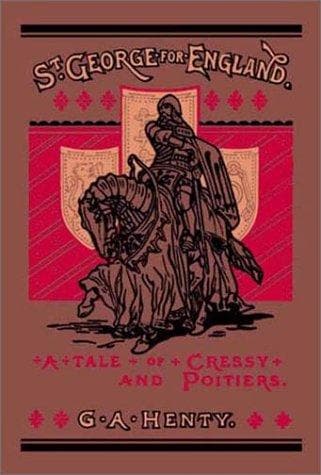
St. George for EnglandHenty, G. A. (George Alfred)
History
St. George for England
Henty, G. A. (George Alfred)
Great Britain -- History -- Edward III, 1327-1377 -- Fiction
Provisions were indeed running short in the English camp, and the
arrival of supplies from England was cut off by a strong fleet under
Don Louis, which cruised off the coast and captured all vessels arriving
with stores. At this moment two legates, the Cardinal Bishop of Preneste
and the Cardinal Bishop of Tusculum, arrived from the pope and strove
to mediate between the two sovereigns and to bring about a cessation of
hostilities, pointing out to them the scandal and desolation which their
rivalry caused in Christendom, the waste of noble lives, the devastation
of once happy provinces, and the effusion of innocent blood. Going from
camp to camp they exhorted, prayed, and reproached the rival sovereigns,
urging that while Christians were shedding each other's blood in vain,
the infidels were daily waxing bolder and more insolent. Their arguments
would have been but of little use had either of the monarchs felt sure
of victory. King Edward, however, felt that his position was growing
desperate, for starvation was staring him in the face, and only by
a victory over an immensely superior force in a strongly entrenched
position could he extricate himself. Upon the part of the French,
however, circumstances were occurring which rendered them anxious for
a release from their position, for they were not without their share
of suffering. While the English army lay on a hill the French camp was
pitched on low ground. An unusually wet season had set in with bitterly
cold wind. The rain was incessant, a pestilence had destroyed a vast
number of their horses, and their encampment was flooded. Their forces
were therefore obligated to spread themselves over the neighbouring
fields, and a sudden attack by the English might have been fatal.
Thus distress pressed upon both commanders, and the pope's legates
found their exertions at last crowned with success. A suspension of
hostilities was agreed to, and the Dukes of Burgundy and Bourbon on the
one side and the Earls of Lancaster, Northampton, and Salisbury on
the other, met as commissioners and agreed to a convention by which
a general truce was to be made from the date of the treaty to the
following Michaelmas, and to be prolonged from that day for the full
term of three years. It was agreed that the truce should embrace not
only the sovereigns, but all the adherents of each of them. The truce
was to hold good in Brittany between all parties, and the city of Vannes
was to be given into the hands of the cardinals to dispose of as
they chose. It was specially provided that in the case of any of the
adherents of either party in the Duchies of Gascony and Brittany waging
war against each other, neither of the monarchs should either directly
or indirectly meddle therewith, nor should the truce be at all broken
thereby.
Public-domain text, read in full here on John Shaqi.
Reviews
Reviews
No reviews yet
Be the first to share your thoughts on this work.
Elsewhere in the archive
Join the Discussion
Join the discussion
Sign in to leave a comment or review.
Sign InorCreate an account