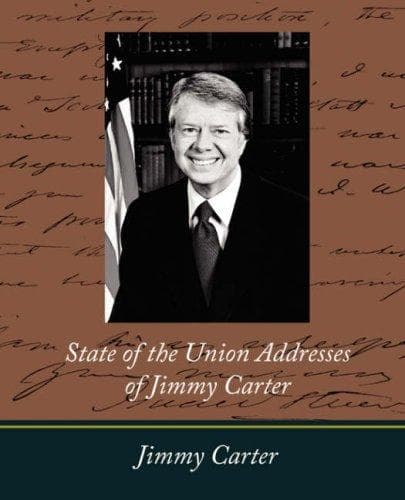
Presidents -- United States -- Messages; United States -- Politics and government -- Sources
The goal of freeing the world from hunger by the year 2000 should command
the full support of all countries.
The Human Dimension of Foreign Policy
HUMAN RIGHTS
The human rights policy of the United States has been an integral part of
our overall foreign policy for the past several years. This policy serves
the national interest of the United States in several important ways: by
encouraging respect by governments for the basic rights of human beings, it
promotes peaceful, constructive change, reduces the likelihood of internal
pressures for violent change and for the exploitation of these by our
adversaries, and thus directly serves our long-term interest in peace and
stability; by matching espousal of fundamental American principles of
freedom with specific foreign policy actions, we stand out in vivid
contrast to our ideological adversaries; by our efforts to expand freedom
elsewhere, we render our own freedom, and our own nation, more secure.
Countries that respect human rights make stronger allies and better
friends.
Rather than attempt to dictate what system of government or institutions
other countries should have, the U.S. supports, throughout the world, the
internationally recognized human rights which all members of the United
Nations have pledged themselves to respect. There is more than one model
that can satisfy the continuing human reach for freedom and justice:
1980 has been a year of some disappointments, but has also seen some
positive developments in the ongoing struggle for fulfillment of human
rights throughout the world. In the year we have seen:
--Free elections were held and democratic governments installed in Peru,
Dominica, and Jamaica. Honduras held a free election for installation of a
constituent assembly. An interim government was subsequently named pointing
toward national presidential elections in 1981. Brazil continues on its
course of political liberalization.
--The "Charter of Conduct" signed in Riobamba, Ecuador, by Ecuador,
Colombia, Venezuela, Peru, Costa Rica, Panama and Spain, affirms the
importance of democracy and human rights for the Andean countries.
--The Organization of American States, in its annual General Assembly,
approved a resolution in support of the Inter-American Human Rights
Commission's work. The resolution took note of the Commission's annual
report, which described the status of human rights in Chile, El Salvador,
Paraguay and Uruguay; and the special reports on Argentina and Haiti, which
described human rights conditions as investigated during on-site
inspections to these countries.
--The awarding of the Nobel Prize for Peace to Adolfo Perez Esquivel of
Argentina for his non-violent advocacy of human rights.
Public-domain text, read in full here on John Shaqi.
Reviews
Reviews
No reviews yet
Be the first to share your thoughts on this work.
Elsewhere in the archive
Join the Discussion
Join the discussion
Sign in to leave a comment or review.
Sign InorCreate an account