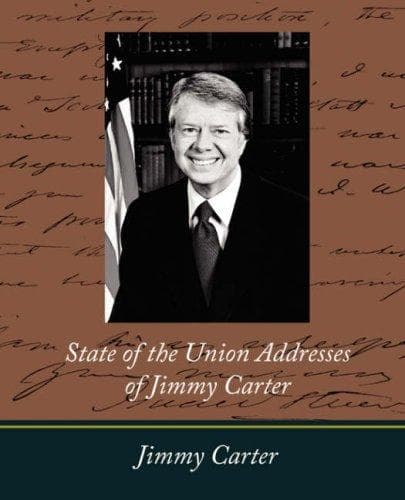
Presidents -- United States -- Messages; United States -- Politics and government -- Sources
--The United States was able to rejoin the International Labor
Organization after an absence of two years, as that U.N. body reformed its
procedures to return to its original purpose of strengthening
employer-employee-government relations to insure human rights for the
working people of the world.
The United States, of course, cannot take credit for all these various
developments. But we can take satisfaction in knowing that our policies
encourage and perhaps influence them.
Those who see a contradiction between our security and our humanitarian
interests forget that the basis for a secure and stable society is the bond
of trust between a government and its people. I profoundly believe that the
future of our world is not to be found in authoritarianism: that wears the
mask of order, or totalitarianism that wears the mask of justice. Instead,
let us find our future in the human face of democracy, the human voice of
individual liberty, the human hand of economic development.
HUMANITARIAN AID
The United States has continued to play its traditional role of safehaven
for those who flee or are forced to flee their homes because of persecution
or war. During 1980, the United States provided resettlement opportunities
for 216,000 refugees from countries around the globe. In addition, the
United States joined with other nations to provide relief to refugees in
country of first asylum in Africa, the Middle East, and Asia.
The great majority of refugee admissions continued to be from Indo-china.
During 1980, 168,000 Indo-chinese were resettled in the United States.
Although refugee populations persist in camps in Southeast Asia, and
refugees continue to flee Vietnam, Laos and Kampuchea, the flow is not as
great as in the past. One factor in reducing the flow from Vietnam has been
the successful negotiation and commencement of an Orderly Departure Program
which permits us to process Vietnamese for resettlement in the United
States with direct departure from Ho Chi Minh Ville in an orderly fashion.
The first group of 250 departed Vietnam for the United States in December,
1980.
In addition to the refugees admitted last year, the United States accepted
for entry into the United States 125,000 Cubans who were expelled by Fidel
Castro. Federal and state authorities, as well as private voluntary
agencies, responded with unprecedented vigor to coping with the unexpected
influx of Cubans.
Major relief efforts to aid refugees in countries of first asylum continued
in several areas of the world. In December, 1980, thirty-two nations,
meeting in New York City, agreed to contribute $65 million to the
continuing famine relief program in Kampuchea. Due in great part to the
generosity of the American people and the leadership exercised in the
international arena by the United States, we have played the pivotal role
in ameliorating massive suffering in Kampuchea.
Public-domain text, read in full here on John Shaqi.
Reviews
Reviews
No reviews yet
Be the first to share your thoughts on this work.
Elsewhere in the archive
Join the Discussion
Join the discussion
Sign in to leave a comment or review.
Sign InorCreate an account