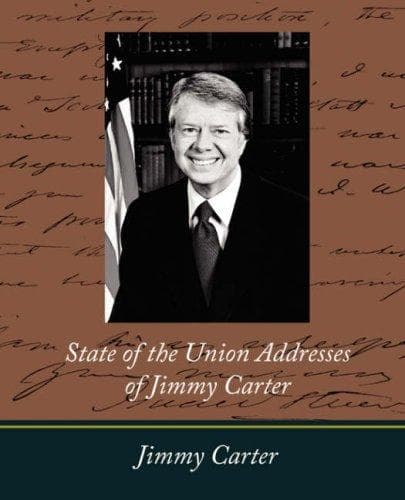
Presidents -- United States -- Messages; United States -- Politics and government -- Sources
The United States has taken the lead among a group of donor countries who
are providing relief to some two million refugees in the Horn of Africa who
have been displaced by fighting in Ethiopia. U.S. assistance, primarily to
Somalia, consists of $35 million worth of food and $18 million in cash and
kind. Here again, United States efforts can in large part be credited with
keeping hundreds of thousands of people alive.
Another major international relief effort has been mounted in Pakistan. The
United States is one of 25 countries plus the European Economic Community
who have been helping the Government of Pakistan to cope with the problem
of feeding and sheltering the more than one million refugees that have been
generated by the Soviet invasion of Afghanistan.
In April, 1980, the Congress passed the Refugee Act of 1980 which brought
together, for the first time, in one piece of legislation the various
threads of U.S. policy towards refugees. The law laid down a new, broader
definition of the term refugee, established mechanisms for arriving at a
level of refugee admissions through consultation with Congress, and
established the Office of the United States Coordinator for Refugees.
It cannot be ignored that the destructive and aggressive policies of the
Soviet Union have added immeasurably to the suffering in these three tragic
situations.
The Control of Nuclear Weapons
Together with our friends and allies, we are striving to build a world in
which peoples with diverse interests can live freely and prosper. But all
that humankind has achieved to date, all that we are seeking to accomplish,
and human existence itself can be undone in an instant--in the catastrophe
of a nuclear war.
Thus one of the central objectives of my Administration has been to control
the proliferation of nuclear weapons to those nations which do not have
them, and their further development by the existing nuclear powers--
notably the Soviet Union and the United States.
NON-PROLIFERATION
My Administration has been committed to stemming the spread of nuclear
weapons. Nuclear proliferation would raise the spectre of the use of
nuclear explosives in crucial, unstable regions of the world endangering
not only our security and that of our Allies, but that of the whole world.
Non-proliferation is not and can not be a unilateral U.S. policy, nor
should it be an issue of contention between the industrialized and
developing states. The international non-proliferation effort requires the
support of suppliers as well as importers of nuclear technology and
materials.
We have been proceeding on a number of fronts:
--First, we have been seeking to encourage nations to accede to the
Non-Proliferation Treaty. The U.S. is also actively encouraging other
nations to accept full-scope safeguards on all of their nuclear activities
and is asking other nuclear suppliers to adopt a full-scope safeguards
requirement as a condition for future supply.
Public-domain text, read in full here on John Shaqi.
Reviews
Reviews
No reviews yet
Be the first to share your thoughts on this work.
Elsewhere in the archive
Join the Discussion
Join the discussion
Sign in to leave a comment or review.
Sign InorCreate an account