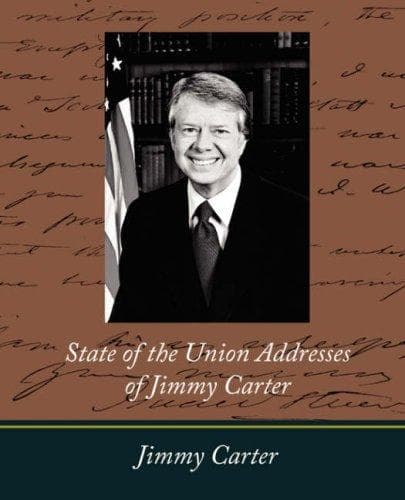
Presidents -- United States -- Messages; United States -- Politics and government -- Sources
While this invasion continues, we and the other nations of the world cannot
conduct business as usual with the Soviet Union. That's why the United
States has imposed stiff economic penalties on the Soviet Union. I will not
issue any permits for Soviet ships to fish in the coastal waters of the
United States. I've cut Soviet access to high-technology equipment and to
agricultural products. I've limited other commerce with the Soviet Union,
and I've asked our allies and friends to join with us in restraining their
own trade with the Soviets and not to replace our own embargoed items. And
I have notified the Olympic Committee that with Soviet invading forces in
Afghanistan, neither the American people nor I will support sending an
Olympic team to Moscow.
The Soviet Union is going to have to answer some basic questions: Will it
help promote a more stable international environment in which its own
legitimate, peaceful concerns can be pursued? Or will it continue to expand
its military power far beyond its genuine security needs, and use that
power for colonial conquest? The Soviet Union must realize that its
decision to use military force in Afghanistan will be costly to every
political and economic relationship it values.
The region which is now threatened by Soviet troops in Afghanistan is of
great strategic importance: It contains more than two-thirds of the world's
exportable oil. The Soviet effort to dominate Afghanistan has brought
Soviet military forces to within 300 miles of the Indian Ocean and close to
the Straits of Hormuz, a waterway through which most of the world's oil
must flow. The Soviet Union is now attempting to consolidate a strategic
position, therefore, that poses a grave threat to the free movement of
Middle East oil.
This situation demands careful thought, steady nerves, and resolute action,
not only for this year but for many years to come. It demands collective
efforts to meet this new threat to security in the Persian Gulf and in
Southwest Asia. It demands the participation of all those who rely on oil
from the Middle East and who are concerned with global peace and stability.
And it demands consultation and close cooperation with countries in the
area which might be threatened.
Meeting this challenge will take national will, diplomatic and political
wisdom, economic sacrifice, and, of course, military capability. We must
call on the best that is in us to preserve the security of this crucial
region.
Let our position be absolutely clear: An attempt by any outside force to
gain control of the Persian Gulf region will be regarded as an assault on
the vital interests of the United States of America, and such an assault
will be repelled by any means necessary, including military force.
Public-domain text, read in full here on John Shaqi.
Reviews
Reviews
No reviews yet
Be the first to share your thoughts on this work.
Join the Discussion
Join the discussion
Sign in to leave a comment or review.
Sign InorCreate an account