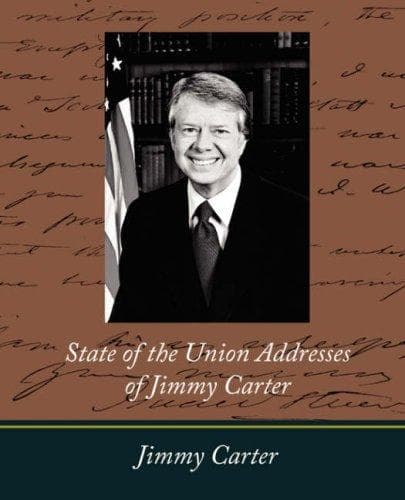
Presidents -- United States -- Messages; United States -- Politics and government -- Sources
--our resolve to oppose aggression, such as the illegal invasion of the
Soviet Union into Afghanistan, has been supported by tough action.
I. ENSURING ECONOMIC STRENGTH ECONOMY
During the last decade our Nation has withstood a series of economic shocks
unprecedented in peacetime. The most dramatic of these has been the
explosive increases of OPEC oil prices. But we have also faced world
commodity shortages, natural disasters, agricultural shortages and major
challenges to world peace and security. Our ability to deal with these
shocks has been impaired because of a decrease in the growth of
productivity and the persistence of underlying inflationary forces built up
over the past 15 years.
Nevertheless, the economy has proved to be remarkably resilient. Real
output has grown at an average rate of 3 percent per year since I took
office, and employment has grown by 10 percent. We have added about 8
million productive private sector jobs to the economy. However,
unacceptably high inflation--the most difficult economic problem I have
faced--persists.
This inflation--which threatens the growth, productivity, and stability of
our economy--requires that we restrain the growth of the budget to the
maximum extent consistent with national security and human compassion. I
have done so in my earlier budgets, and in my FY '82 budget. However, while
restraint is essential to any appropriate economic policy, high inflation
cannot be attributed solely to government spending. The growth in budget
outlays has been more the result of economic factors than the cause of
them.
We are now in the early stages of economic recovery following a short
recession. Typically, a post-recessionary period has been marked by
vigorous economic growth aided by anti-recessionary policy measures such as
large tax cuts or big, stimulation spending programs. I have declined to
recommend such actions to stimulate economic activity, because the
persistent inflationary pressures that beset our economy today dictate a
restrained fiscal policy.
Accordingly, I am asking the Congress to postpone until January 1, 1982,
the personal tax reductions I had earlier proposed to take effect on
January 1 of this year.
However, my 1982 budget proposes significant tax changes to increase the
sources of financing for business investment. While emphasizing the need
for continued fiscal restraint, this budget takes the first major step in a
long-term tax reduction program designed to increase capital formation. The
failure of our Nation's capital stock to grow at a rate that keeps pace
with its labor force has clearly been one cause of our productivity
slowdown. Higher investment rates are also critically needed to meet our
Nation's energy needs, and to replace energy-inefficient plants and
equipment with new energy-saving physical plants. The level of investment
that is called for will not occur in the absence of policies to encourage
it.
Public-domain text, read in full here on John Shaqi.
Reviews
Reviews
No reviews yet
Be the first to share your thoughts on this work.
Join the Discussion
Join the discussion
Sign in to leave a comment or review.
Sign InorCreate an account