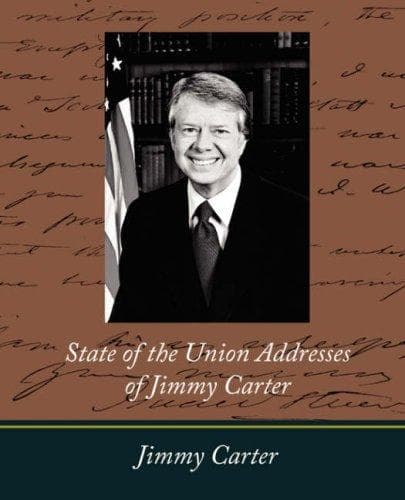
Presidents -- United States -- Messages; United States -- Politics and government -- Sources
As a result of these policies and programs, the energy efficiency of the
American economy has improved markedly and investments in renewable energy
sources have grown significantly. It now takes 3 1/2 percent less energy to
produce a constant dollar of GNP than it did in January 1977. This increase
in efficiency represents a savings of over 1.3 million barrels per day of
oil equivalent, about the level of total oil production now occurring in
Alaska. Over the same period, Federal support for conservation and solar
energy has increased by more than 3000 percent, to $3.3 billion in FY 1981,
including the tax credits for solar energy and energy conservation
investments--these credits are expected to amount to $1.2 billion in FY
1981 and $1.5 billion in FY 1982.
COMMITMENT TO NUCLEAR SAFETY AND SECURITY
Since January 1977, significant progress has been achieved in resolving
three critical problems resulting from the use of nuclear energy:
radioactive waste management, nuclear safety and weapons proliferation.
In 1977, the Administration announced its nuclear nonproliferation policy
and initiated the International Fuel Cycle Evaluation. In 1978, Congress
passed the Nuclear Nonproliferation Act, an historic piece of legislation.
In February 1980, the Administration transmitted its nuclear waste
management policy to the Congress. This policy was a major advance over all
previous efforts. The principal aspects of that policy are: acknowledging
the seriousness of the problem and the numerous technical and institutional
issues; adopting a technically and environmentally conservative approach to
the first permanent repository; and providing the states with significant
involvement in nuclear waste disposal decisions by creating the State
Planning Council. While much of the plan can be and is being implemented
administratively, some new authorities are needed. The Congress should give
early priority to enacting provisions for away-from-reactor storage and the
State Planning Council.
The accident at Three Mile Island made the nation acutely aware of the
safety risks posed by nuclear power plants. In response, the President
established the Kemeny Commission to review the accident and make
recommendations. Virtually all of the Commission's substantive
recommendations were adopted by the Administration and are now being
implemented by the Nuclear Regulatory Commission. The Congress adopted the
President's proposed plan for the Nuclear Regulatory Commission and the
Nuclear Safety Oversight Committee was established to ensure that the
Administration's decisions were implemented.
Nuclear safety will remain a vital concern in the years ahead. We must
continue to press ahead for the safe, secure disposal of radioactive
wastes, and prevention of nuclear proliferation.
Public-domain text, read in full here on John Shaqi.
Reviews
Reviews
No reviews yet
Be the first to share your thoughts on this work.
Join the Discussion
Join the discussion
Sign in to leave a comment or review.
Sign InorCreate an account