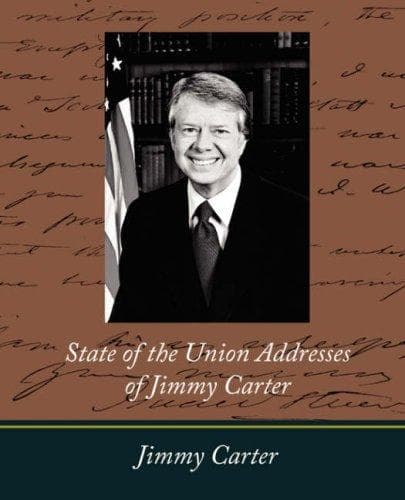
Presidents -- United States -- Messages; United States -- Politics and government -- Sources
During the past year the Administration has stated its support for
legislation that would provide specific Federal assistance for the
installation of fuel-efficient engines in existing American ships, and
would strengthen this country's shipbuilding mobilization base.
Strengthening the fleet is important, but we must also maintain our
shipbuilding base for future ship construction.
Provisions in existing laws calling for substantial or exclusive use of
American-flag vessels to carry cargoes generated by the Government must be
vigorously pursued.
I have therefore supported requirements that 50 percent of oil purchased
for the strategic petroleum reserve be transported in U.S.-flag vessels,
that the Cargo Preference Act be applied to materials furnished for the
U.S. assisted construction of air bases in Israel, and to cargoes
transported pursuant to the Chrysler Corporation Loan Guarantee Act. In
addition, the deep Seabed Hard Mineral Resources Act requires that at least
one ore carrier per mine site be a U.S.-flag vessel.
Much has been done, and much remains to be done. The FY 1982 budget
includes a $107 million authorization for Construction Differential Subsidy
("CDS") funds which, added to the unobligated CDS balance of $100 million
from 1980, and the recently enacted $135 million 1981 authorization, will
provide an average of $171 million in CDS funds in 1981 and 1982.
COAL EXPORT POLICY
While significant growth in foreign demand for U.S. steam coal is foreseen,
congestion at major U.S. coal exporting ports such as Hampton Roads,
Virginia, and Baltimore, Maryland, could delay and impede exports.
My Administration has worked through the Interagency Coal Task Force Study,
which I created, to promote cooperation and coordination of resources
between shippers, railroads, vessel broker/ operators and port operators,
and to determine the most appropriate Federal role in expanding and
modernizing coal export facilities, including dredging deeper channels at
selected ports.
Some progress has already been made. In addition to action taken by
transshippers to reduce the number of coal classifications used whenever
possible, by the Norfolk and Western Railroad to upgrade its computer
capability to quickly inventory its coal cars in its yards, and by the
Chessie Railroad which is reactivating Pier 15 in Newport News and has
established a berth near its Curtis Bay Pier in Baltimore to decrease
delays in vessel berthing, public activities will include:
--A $26.5 million plan developed by the State of Pennsylvania and Conrail
to increase Conrail's coal handling capacity at Philadelphia;
--A proposal by the State of Virginia to construct a steam coal port on
the Craney Island Disposal area in Portsmouth harbor;
--Plans by Mobile, Alabama, which operates the only publicly owned coal
terminal in the U.S. to enlarge its capacity at McDuffie Island to 10
million tons ground storage and 100 car unit train unloading capability;
Public-domain text, read in full here on John Shaqi.
Reviews
Reviews
No reviews yet
Be the first to share your thoughts on this work.
Join the Discussion
Join the discussion
Sign in to leave a comment or review.
Sign InorCreate an account