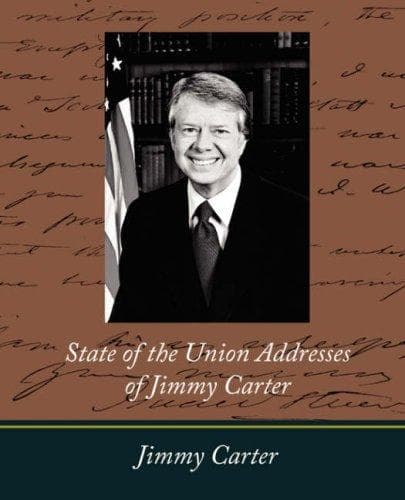
Presidents -- United States -- Messages; United States -- Politics and government -- Sources
At Riobamba, Ecuador, last September four Andean Pact countries, Costa
Rica, and Panama broke new ground by adopting a "Code of Conduct," that
joint action in defense of human rights does not violate the principles of
nonintervention in the internal affairs of states in this hemisphere. The
Organization of American States has twice condemned the coup that
overturned the democratic process in Bolivia and the widespread abuse of
human rights by the regime which seized power. The Inter-American
Commission on Human Rights has gained world acclaim for its dispassionate
reports. It completed two major country studies this year in addition to
its annual report. In a resolution adopted without opposition, the OAS
General Assembly in November strongly supported the work of the Commission.
The American Convention on Human Rights is in force and an Inter-American
Court has been created to judge human rights violations. This convention
has been pending before the Senate for two years; I hope the United States
this year will join the other nations of the hemisphere in ratifying a
convention which embodies principles that are our tradition.
The trend in favor of democracy has continued. During this past year, Peru
inaugurated a democratically elected government. Brazil continues its
process of liberalization. In Central America, Hondurans voted in record
numbers in their first national elections in over eight years. In the
Caribbean seven elections have returned governments firmly committed to the
democratic traditions of the Commonwealth.
Another major contribution to peace in the hemisphere is Latin America's
own Treaty for the Prohibition of Nuclear Weapons. On behalf of the United
States, I signed Protocol I of this Treaty in May of 1977 and sent it to
the Senate for ratification. I urge that it be acted upon promptly by the
Senate in order that it be brought into the widest possible effect in the
Latin American region.
Regional cooperation for development is gaining from Central America to the
Andes, and throughout the Caribbean. The Caribbean Group for Cooperation in
Economic Development, which we established with 29 other nations in 1977,
has helped channel $750 million in external support for growth in the
Caribbean. The recent meeting of the Chiefs of State of the Eastern
Caribbean set a new precedent for cooperation in that region. Mexico and
Venezuela jointly and Trinidad and Tobago separately have established oil
facilities that will provide substantial assistance to their oil importing
neighbors. The peace treaty between El Salvador and Honduras will hopefully
stimulate Central America to move forward again toward economic
integration. Formation of Caribbean/ Central American Action, a private
sector organization, has given a major impetus to improving
people-to-people bonds and strengthening the role of private enterprise in
the development of democratic societies.
Public-domain text, read in full here on John Shaqi.
Reviews
Reviews
No reviews yet
Be the first to share your thoughts on this work.
Elsewhere in the archive
Join the Discussion
Join the discussion
Sign in to leave a comment or review.
Sign InorCreate an account