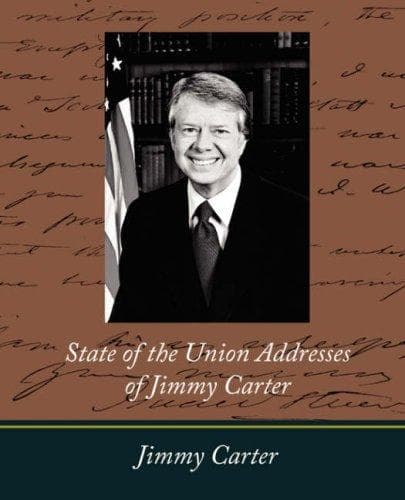
Presidents -- United States -- Messages; United States -- Politics and government -- Sources
The Panama treaties have been in force for over a year. A new partnership
has been created with Panama; it is a model for large and small nations. A
longstanding issue that divided us from our neighbors has been resolved.
The security of the canal has been enhanced. The canal is operating as well
as ever, with traffic through it reaching record levels this year. Canal
employees, American and Panamanian alike, have remained on the job and have
found their living and working conditions virtually unchanged.
In 1980, relations with Mexico continued to improve due in large measure to
the effectiveness of the Coordinator for Mexican Affairs and the expanded
use of the U.S.-Mexico Consultative Mechanism. By holding periodic meetings
of its various working groups, we have been able to prevent mutual concerns
from becoming political issues. The Secretary of State visited Mexico City
in November, and, along with the Mexican Secretary of Foreign Relations,
reviewed the performance of the Consultative Mechanism. The office of the
Coordinator has ensured the implementation of my directive to all agencies
to accord high priority to Mexican concerns. Trade with Mexico rose by
almost 60 percent to nearly $30 billion, making that country our third
largest trading partner.
These are all encouraging developments. Other problems remain, however.
The impact of large-scale migration is affecting many countries in the
hemisphere. The most serious manifestation was the massive, illegal exodus
from Cuba last summer. The Cuban government unilaterally encouraged the
disorderly and even deadly migration of 125,000 of its citizens in complete
disregard for international law or the immigration laws of its neighbors.
Migrations of this nature clearly require concerted action, and we have
asked the OAS to explore means of dealing with similar situations which may
occur in the future.
We have a long-standing treaty with Colombia on Quita Sueno, Roncador, and
Serrano which remains to be ratified by the Senate.
In Central America, the future of Nicaragua is unclear. Recent tensions,
the restrictions on the press and political activity, an inordinate Cuban
presence in the country and the tragic killing by the security forces of a
businessman well known for his democratic orientation, cause us
considerable concern. These are not encouraging developments. But those who
seek a free society remain in the contest for their nation's destiny. They
have asked us to help rebuild their country, and by our assistance, to
demonstrate that the democratic nations do not intend to abandon Nicaragua
to the Cubans. As long as those who intend to pursue their pluralistic
goals play important roles in Nicaragua, it deserves our continuing
support.
Public-domain text, read in full here on John Shaqi.
Reviews
Reviews
No reviews yet
Be the first to share your thoughts on this work.
Elsewhere in the archive
Join the Discussion
Join the discussion
Sign in to leave a comment or review.
Sign InorCreate an account