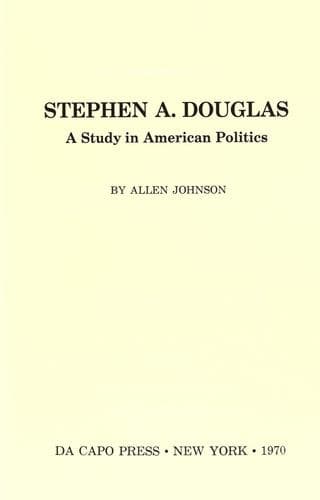
Stephen A. Douglas: A Study in American PoliticsJohnson, Allen
History
Stephen A. Douglas: A Study in American Politics
Johnson, Allen
Douglas, Stephen A. (Stephen Arnold), 1813-1861
Subsequent events acquit Douglas of truckling to the South at this
time. No doubt he would have been glad to let bygones be bygones, to
close up the gap of unpleasant memories between himself and the
administration, and to restore Democratic harmony. For Douglas loved
his party and honored its history. To him the party of Jefferson and
Jackson was inseparably linked with all that made the American
Commonwealth the greatest of democracies. Yet where men are acutely
conscious of vital differences of opinion, only the hourly practice of
self-control can prevent clashing. Neither Douglas nor his opponents
were prepared to undergo any such rigid self-discipline.
On February 23d, the pent-up feeling broke through all barriers and
laid bare the thoughts and intents of the Democratic factions. The
Kansas question once more recurring, Brown of Mississippi now demanded
adequate protection for property; that is, "protection sufficient to
protect animate property." Any other protection would be a delusion
and a cheat. If the territorial legislature refused such protection,
he for one would demand it of Congress. He dissented altogether from
the doctrine of the Senator from Illinois, that by non-action, or
unfriendly legislation a Territory could annul a decision of the
Supreme Court and exclude slavery. That was mistaking power for right.
"What I want to know is, whether you will interpose against power and
in favor of right.... If the Territorial Legislature refuses to act,
will you act?... If it pass laws hostile to slavery, will you annul
them, and substitute laws favoring slavery in their stead?" "What I
and my people ask is action; positive, unqualified action. Our
understanding of the doctrine of non-intervention was, that you were
not to intervene against us, but I never understood that we could have
any compromise or understanding here which could release Congress from
an obligation imposed on it by the Constitution of the United
States."[783]
Public-domain text, read in full here on John Shaqi.
Reviews
Reviews
No reviews yet
Be the first to share your thoughts on this work.
Elsewhere in the archive
Join the Discussion
Join the discussion
Sign in to leave a comment or review.
Sign InorCreate an account