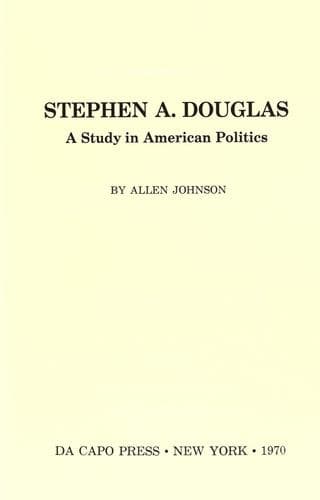
Stephen A. Douglas: A Study in American PoliticsJohnson, Allen
History
Stephen A. Douglas: A Study in American Politics
Johnson, Allen
Douglas, Stephen A. (Stephen Arnold), 1813-1861
His closing words were marked with much the same perfervid rhetoric,
only less objectionable because they were charged with genuine
emotion: "Can gentlemen see nothing to admire, nothing to commend, in
the closing scenes, when, fresh from the battlefield, the victorious
general--the idol of his army and the acknowledged savior of his
countrymen--stood before Judge Hall, and quelled the tumult and
indignant murmurs of the multitude by telling him that 'the same arm
which had defended the city from the ravages of a foreign enemy should
protect him in the discharge of his duty?' Is this the conduct of a
lawless desperado, who delights in trampling upon Constitution, and
law, and right? Is there no reverence for the supremacy of the laws
and the civil institutions of the country displayed on this occasion?
If such acts of heroism and moderation, of chivalry and submission,
have no charms to excite the admiration or soften the animosities of
gentlemen in the Opposition, I have no desire to see them vote for
this bill. The character of the hero of New Orleans requires no
endorsement from such a source. They wish to fix a mark, a stigma of
reproach, upon his character, and send him to his grave branded as a
criminal. His stern, inflexible adherence to Democratic principles,
his unwavering devotion to his country, and his intrepid opposition to
her enemies, have so long thwarted their unhallowed schemes of
ambition and power, that they fear the potency of his name on earth,
even after his spirit shall have ascended to heaven."
"An eloquent, sophistical speech, prodigiously admired by the slave
Democracy of the House," was the comment of John Quincy Adams; words
of high praise, for the veteran statesman had little patience with
the style of oratory affected by this "homunculus."[168] A
correspondent of a Richmond newspaper wrote that this effort had given
Douglas high rank as a debater.[169] Evidence on every hand confirms
the impression that by a single, happy stroke the young Illinoisan had
achieved enviable distinction; but whether he had qualities which
would secure an enduring reputation, was still open to question.
In the long run, the confidence of party associates is the surest
passport to real influence in the House. It might easily happen,
indeed, that Douglas, with all his rough eloquence, would remain an
impotent legislator. The history of Congress is strewn with oratorical
derelicts, who have often edified their auditors, but quite as often
blocked the course of legislation. No one knew better than Douglas,
that only as he served his party, could he hope to see his wishes
crystallize into laws, and his ambitions assume the guise of reality.
His opportunity to render effective service came also in this first
session.
Public-domain text, read in full here on John Shaqi.
Reviews
Reviews
No reviews yet
Be the first to share your thoughts on this work.
Join the Discussion
Join the discussion
Sign in to leave a comment or review.
Sign InorCreate an account