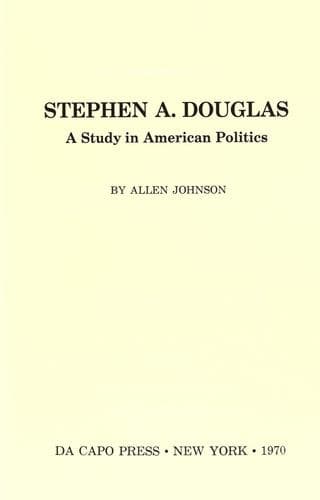
Stephen A. Douglas: A Study in American Politics — John Shaqi
Stephen A. Douglas: A Study in American PoliticsJohnson, Allen
History
Stephen A. Douglas: A Study in American Politics
Johnson, Allen
Douglas, Stephen A. (Stephen Arnold), 1813-1861
Happily, his academic course was not long interrupted by this
migration, for Canandaigua Academy, which offered unusual advantages,
was within easy reach from his new home. Under the wise instruction of
Professor Henry Howe, he began the study of Latin and Greek; and by
his own account made "considerable improvement," though there is
little evidence in his later life of any acquaintance with the
classics. He took an active part in the doings of the literary
societies of the academy, distinguishing himself by his readiness in
debate. His Democratic proclivities were still strong; and he became
an ardent defender of Democracy against the rising tide of
Anti-Masonry, which was threatening to sweep New York from its
political moorings. Tradition says that young Douglass mingled much
with local politicians, learning not a little about the arts and
devices by which the Albany Regency controlled the Democratic
organization in the State. In this school of practical politics he was
beyond a peradventure an apt pupil.
A characteristic story is told of Douglass during these school days at
Canandaigua.[15] A youngster who occupied a particularly desirable
seat at table had been ousted by another lad, who claimed a better
right to the place. Some one suggested that the claimants should have
the case argued by counsel before a board of arbitration. The
dispossessed boy lost his case, because of the superior skill with
which Douglass presented the claims of his client. "It was the first
assertion of the doctrine of squatter sovereignty," said the defeated
claimant, recalling the incident years afterward, when both he and
Douglas were in politics.
Douglass was now maturing rapidly. His ideals were clearer; his native
tastes more pronounced. It is not improbable that already he looked
forward to politics as a career. At all events he took the proximate
step toward that goal by beginning the study of law in the office of
local attorneys, at the same time continuing his studies begun in the
academy. What marked him off from his comrades even at this period was
his lively acquisitiveness. He seemed to learn quite as much by
indirection as by persevering application to books.[16]
Public-domain text, read in full here on John Shaqi.
Reviews
Reviews
No reviews yet
Be the first to share your thoughts on this work.
Join the Discussion
Join the discussion
Sign in to leave a comment or review.
Sign InorCreate an account