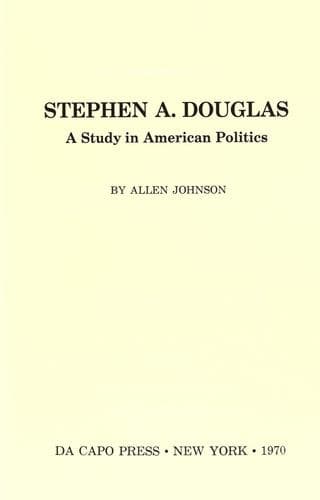
Stephen A. Douglas: A Study in American PoliticsJohnson, Allen
History
Stephen A. Douglas: A Study in American Politics
Johnson, Allen
Douglas, Stephen A. (Stephen Arnold), 1813-1861
With cool audacity and perfect self-possession, Douglas undertook to
recall the Senate to its wonted composure,--a service not likely to be
graciously received by the aggrieved parties. Douglas remarked
sarcastically that Southern gentlemen had effected just what the
Senator from New Hampshire, as presidential candidate of the
Abolitionists, had desired: they had unquestionably doubled his vote
in the free States. The invitation of the Senator from Mississippi
alone was worth not less than ten thousand votes to the Senator from
New Hampshire. "It is the speeches of Southern men, representing slave
States, going to an extreme, breathing a fanaticism as wild and as
reckless as that of the Senator from New Hampshire, which creates
Abolitionism in the North." These were hardly the words of the
traditional peacemaker. Senator Foote was again upon his feet
breathing out imprecations. "I must again congratulate the Senator
from New Hampshire," resumed Douglas, "on the accession of the five
thousand votes!" Again a colloquy ensued. Calhoun declared Douglas's
course "at least as offensive as that of the Senator from New
Hampshire." Douglas was then permitted to speak uninterruptedly. He
assured his Southern colleagues that, as one not altogether
unacquainted with life in the slave States, he appreciated their
indignation against Abolitionists and shared it; but as he had no
sympathy for Abolitionism, he also had none for that extreme course of
Southern gentlemen which was akin to Abolitionism. "We stand up for
all your constitutional rights, in which we will protect you to the
last.... But we protest against being made instruments--puppets--in
this slavery excitement, which can operate only to your interest and
the building up of those who wish to put you down."[245]
Dignified silence, however, was the last thing to be expected from the
peppery gentleman from Mississippi. He must speak "the language of
just indignation." He gladly testified to the consideration with which
Douglas was wont to treat the South, but he warned the young Senator
from Illinois that the old adage--_"in medio tutissimus ibis"_--might
lead him astray. He might think to reach the goal of his ambitions by
keeping clear of the two leading factions and by identifying himself
with the masses, but he was grievously mistaken.
Public-domain text, read in full here on John Shaqi.
Reviews
Reviews
No reviews yet
Be the first to share your thoughts on this work.
Elsewhere in the archive
Join the Discussion
Join the discussion
Sign in to leave a comment or review.
Sign InorCreate an account