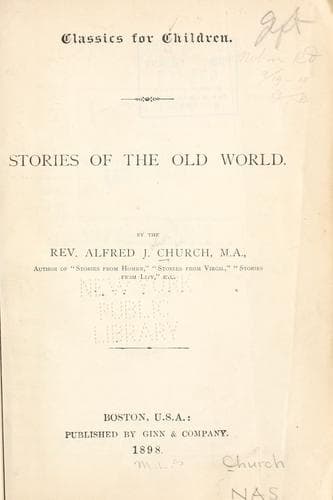
Mythology, Greek -- Juvenile literature; Mythology, Roman -- Juvenile literature
And as he spake he dashed his sceptre on the ground and sat down. And
on the other side Agamemnon sat in furious anger. Then Nestor rose,
an old man of a hundred years and more, and counselled peace. Let
them listen, he said, to his counsel. Great chiefs in the old days,
with whom no man now alive would dare to fight, had listened. Let not
Agamemnon take away from the bravest of the Greeks the prize of war;
let not Achilles, though he was mightier in battle than all other men,
contend with Agamemnon, who was sovereign lord of all the hosts of
Greece. But he spake in vain. For Agamemnon answered,--
“Nestor, thou speakest well, and peace is good. But this fellow would
lord it over all, and he must be taught that there is one here, at
least, who is better than he.”
And Achilles said, “I were a slave and a coward if I owned thee as my
lord. Not so: play the master over others, but think not to master me.
As for the prize which the Greeks gave me, let them do as they will.
They gave it; let them take it away. But if thou darest to touch aught
that is mine own, that hour thy life-blood shall redden on my spear.”
Then the assembly was dismissed. Chryseïs was sent to her home with
due offerings to the god, the wise Ulysses going with her. And all the
people purified themselves, and the plague was stayed.
But King Agamemnon would not go back from his purpose. So he called to
him the heralds, Talthybius and Eurybates, and said,--
“Heralds, go to the tents of Achilles and fetch the maiden Briseïs. But
if he will not let her go, say that I will come myself with many others
to fetch her; so will it be the worse for him.”
Sorely against their will the heralds went. Along the sea-shore they
walked, till they came to where, amidst the Myrmidons, were the tents
of Achilles. There they found him sitting, but stood silent in awe and
fear. But Achilles spied them, and cried aloud, “Come near, ye heralds,
messengers of gods and men. ’Tis no fault of yours that ye are come on
such an errand.”
Then he turned to Patroclus (now Patroclus was his dearest friend) and
said, “Bring the maiden from her tent, and let the heralds lead her
away. But let them be witnesses before gods and men, and before this
evil-minded king, against the day when he shall have sore need of me to
save his host from destruction. Fool that he is, who thinks not of the
past nor of the future, that his people may be safe!”
Public-domain text, read in full here on John Shaqi.
Reviews
Reviews
No reviews yet
Be the first to share your thoughts on this work.
Join the Discussion
Join the discussion
Sign in to leave a comment or review.
Sign InorCreate an account