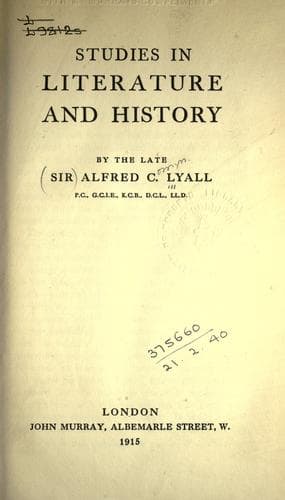
Studies in Literature and HistoryLyall, Alfred C., Sir
Religion
Studies in Literature and History
Lyall, Alfred C., Sir
English literature; History; Literature; Religion; Utilitarianism
grandfathers at the beginning of the nineteenth. In the meantime the
reading of Byron may operate as a wholesome tonic upon the literary
nerves of the rising generation; for, as Mr. Swinburne has generously
acknowledged, with the emphatic concurrence of Matthew Arnold, his
poems have 'the excellence of sincerity and strength.' Now one
tendency of latter-day verse has been toward that over-delicacy of
fibre which has been termed decadence, toward the preference of
correct metrical harmonies over distinct and incisive expression,
toward vague indications of meaning. In this form the melody prevails
over the matter; the style inclines to become precious and garnished
with verbal artifice. Some recent French poets, indeed, in their
anxiety to correct the troublesome lucidity of their mother-tongue,
have set up the school of symbolism, which deals in half-veiled
metaphor and sufficiently obscure allusion, relying upon subtly
suggestive phrases for evoking associations. For ephemeral infirmities
of this kind the straightforward virility of Byron's best work may
serve as an antidote. On the other hand, we have the well-knit
strenuous verse of extreme realism, wrought out by a poet in his
shirt-sleeves, with rhymes clear-sounding like the tap of hammer on
anvil, who sings of rough folk by sea and land, and can touch national
emotion in regard to the incidents or politics of the moment. He
paints without varnish, in hard outline, avoiding metaphor and
ornamental diction generally; taking his language so freely out of the
mouths of men in actual life that he makes occasional slips into
vulgarity. He is at the opposite pole from the symbolist; but true
poetry demands much more distinction of style and nobility of thought.
And here again Byron's high lyrical notes may help to maintain
elevation of tone and to preserve the romantic tradition. His poetry,
like his character, is full of glaring imperfections; yet he wrote as
one of the great world in which he made for a time such a noise; and
after all that has been said about his moral delinquencies, it is
certain that we could have better spared a better man.
In one of Tennyson's earlier letters is the following passage, with
reference to something written at the time in _Philip van Artevelde_:
'He does not sufficiently take into consideration the peculiar
strength evolved by such writers as Byron and Shelley, who, however
mistaken they may be, did yet give the world another heart, and a
new pulse, and so we are kept going. Blessed be those who grease
the wheels of the old world.'
Public-domain text, read in full here on John Shaqi.
Reviews
Reviews
No reviews yet
Be the first to share your thoughts on this work.
Elsewhere in the archive
Join the Discussion
Join the discussion
Sign in to leave a comment or review.
Sign InorCreate an account