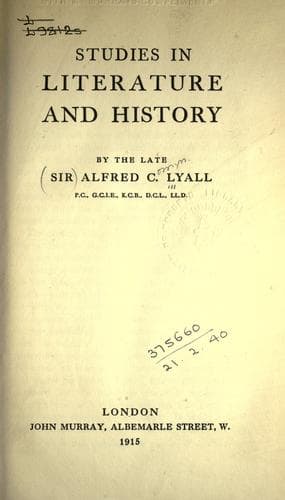
Studies in Literature and HistoryLyall, Alfred C., Sir
Religion
Studies in Literature and History
Lyall, Alfred C., Sir
English literature; History; Literature; Religion; Utilitarianism
Thus Mr. Swinburne's elder contemporaries and precursors in poetry
were all in different modes and fashions optimists; at any rate in
their earlier writings. They stood outside the Churches; dogmatic
beliefs they tacitly put away; they were in sympathy with the
Christian ideal apart from its supernatural element; they professed a
vague trust in an unseen Power, chequered here and there by
intimations of pantheism; they made no frontal assault upon the
central positions of theology. When we turn to their emotional poetry
we find that they were always decorous; there is much discourse of
love, often passionate, never erotic, no tearing aside of drapery, not
a line to scare modesty. In Tennyson's most impassioned lyrics the
principal figure is the broken-hearted lover, jilted by Cousin Amy,
or caught in the garden with Maud--with intentions strictly honourable
in both cases. The treatment of love by Browning and Meredith is
chiefly psychological; they are usually concerned with the tragic
situations that it can involve, though the comic aspect of sexual
infatuation occasionally provokes cynicism. In politics all these
poets are no friends to democracy or seething radicalism; they adore
liberty, yet they are votaries of law and order; they have a hatred of
misrule, and generally a cheerful confidence in the world's evolution
toward better things. On social ethics the poets of the mid-Victorian
period wrote with philosophic sobriety; they maintained a strict moral
standard. In their wildest emotional flights they abstained from
irreverence or indecorum. They undoubtedly represented the prevailing
cast of thought, the taste and tendencies of the society to which they
belonged; the growing scepticism, the influence on established ideas
of advancing science and philosophy. Literature had been showing
distinct signs of sympathy with these novelties, but in the early
'sixties an open revolt was generally discountenanced.
Public-domain text, read in full here on John Shaqi.
Reviews
Reviews
No reviews yet
Be the first to share your thoughts on this work.
Elsewhere in the archive
Join the Discussion
Join the discussion
Sign in to leave a comment or review.
Sign InorCreate an account