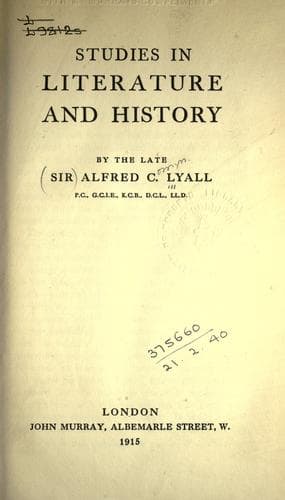
Studies in Literature and HistoryLyall, Alfred C., Sir
Religion
Studies in Literature and History
Lyall, Alfred C., Sir
English literature; History; Literature; Religion; Utilitarianism
Mr. Swinburne's first publications were two historic plays, of which
something will be said hereafter. In 1864 he turned suddenly from
modern history to ancient legend for his dramatic subject, when he
aroused immediate attention by _Atalanta in Calydon_, which reproduced
the structure and metrical arrangement of a Greek tragedy. The
dialogue has the purity of tone, the clear-cut concision that belong
to its Hellenic model. At the beginning we have a joyous chant full of
sound and colour, gradually changing into the elegiac strain of
foreboding, the dread of pitiless divinities, the lamentation for the
hero's unmerited fate. The exquisite modulations of the verse, the
splendid choral antiphonies captivated all who were susceptible to the
enchantment of poetry. The delicate adaptation of the English language
to quantitative harmonies in high resonant lyrics showed extraordinary
skill in the difficult enterprise of communicating the charm and
cadences of the antique masterpieces. It is a heroic drama, severe in
style and character as the _Antigone_ of Sophocles. Then in 1865 came
_Chastelard_, conceived and partly written, as Mr. Swinburne has told
us, when he was yet at Oxford, a play in which he turns from the Greek
tragedians to rejoin the historical dramatists. The turn is abrupt,
for no character could have been more alien to the Greek notions of
heroism than that of the love-sick knight who joyfully throws away his
life for an hour in his lady's chamber, tears up the warrant
reprieving him from execution, and accepts death to save Queen Mary's
fragile reputation. But although the keynote of Mr. Swinburne's coming
poetry is struck in _Chastelard_--the overpowering enthralment of
Love, a joy to live and die for--
'The mistress and mother of pleasure,
The one thing as certain as death'--
yet it gave the British public no fair warning of what followed almost
immediately.
Public-domain text, read in full here on John Shaqi.
Reviews
Reviews
No reviews yet
Be the first to share your thoughts on this work.
Elsewhere in the archive
Join the Discussion
Join the discussion
Sign in to leave a comment or review.
Sign InorCreate an account