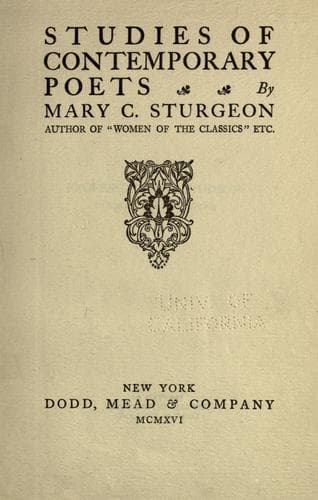
English poetry -- 20th century -- History and criticism
The fact is all the more remarkable when we turn for a moment to note
the poet's grip on facts. We have just seen that profound sense of
reality lying at the base of his technical realism; and it has been won,
through a comprehensive experience, by virtue of the balance of his
equipment. There is no bias here, of mind or spirit, which would have
changed the clear humanity of the poet into the philosopher or the
mystic. The naïveté and simple concrete imagery in the expression of
religious feeling are far removed from mysticism. And, on the other
hand, one cannot conceive of Mr Masefield formally ranged with the
abstractions of either the materialist or the idealist school. Yet it is
true that "Dauber" raises the practical issue between the two; and
because the poet has realized life profoundly and dares to tell the
truth about it, the triumph of the ideal is the more complete. He shows
his hero scourged by the elements until all sense is lost but that of
physical torture--
... below
He caught one giddy glimpsing of the deck
Filled with white water, as though heaped with snow.
... all was an icy blast.
Roaring from nether hell and filled with ice,
Roaring and crashing on the jerking stage,
An utter bridle given to utter vice,
Limitless power mad with endless rage
Withering the soul;
With greater daring still we are shown the spirit itself, cowering in
temporary defeat before material force--
"This is the end," he muttered, "come at last!
I've got to go aloft, facing this cold.
I can't. I can't. I'll never keep my hold.
... I'm a failure. All
My life has been a failure. They were right.
.....
I'll never paint. Best let it end to-night.
I'll slip over the side. I've tried and failed."
And then, finally, the poet does not shrink from the last and grimmest
reality. He seems to say--Let material force do its utmost against this
man. Admit the most dreadful possibility; shatter the life, with its
fine promise, its aspiration and toil and precious perception of beauty,
and fling it to the elements which claim it. Nevertheless the spirit
will conquer, as it has won in the long fight hitherto and will continue
to win. When the Dauber had been goaded almost beyond endurance by the
cruelty of his shipmates, and when their taunts had availed at last to
conjure in him a sickening doubt of his vocation, the poet represents
him as turning instinctively to his easel, and healed in a moment of all
the abasement and derision--
He dipped his brush and tried to fix a line,
And then came peace, and gentle beauty came,
Turning his spirit's water into wine,
Lightening his darkness with a touch of flame:
Public-domain text, read in full here on John Shaqi.
Reviews
Reviews
No reviews yet
Be the first to share your thoughts on this work.
Elsewhere in the archive
Join the Discussion
Join the discussion
Sign in to leave a comment or review.
Sign InorCreate an account