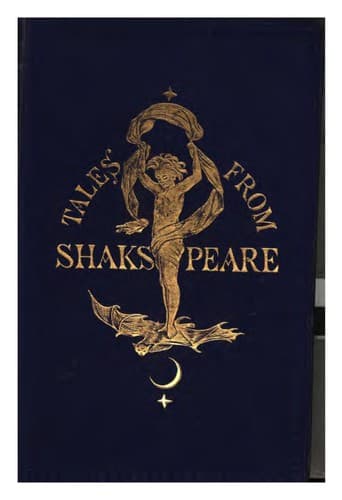
Shakespeare, William, 1564-1616 -- Adaptations; Shakespeare, William, 1564-1616 -- Stories, plots, etc. -- Juvenile literature
And when they were alone together, the spirit broke silence and
told him that he was the ghost of Hamlet, his father, who had
been cruelly murdered, and he told the manner of it; that it was
done by his own brother Claudius, Hamlet’s uncle, as Hamlet had
already but too much suspected, for the hope of succeeding to his
bed and crown. That as he was sleeping in his garden, his custom
always in the afternoon, his treasonous brother stole upon him in
his sleep and poured the juice of poisonous henbane into his
ears, which has such an antipathy to the life of man that, swift
as quicksilver, it courses through all the veins of the body,
baking up the blood and spreading a crust-like leprosy all over
the skin. Thus sleeping, by a brother’s hand he was cut off at
once from his crown, his queen, and his life; and he adjured
Hamlet, if he did ever his dear father love, that he would
revenge his foul murder. And the ghost lamented to his son that
his mother should so fall off from virtue as to prove false to
the wedded love of her first husband and to marry his murderer;
but he cautioned Hamlet, howsoever he proceeded in his revenge
against his wicked uncle, by no means to act any violence against
the person of his mother, but to leave her to Heaven, and to the
stings and thorns of conscience. And Hamlet promised to observe
the ghost’s direction in all things, and the ghost vanished.
And when Hamlet was left alone he took up a solemn resolution
that all he had in his memory, all that he had ever learned by
books or observation, should be instantly forgotten by him, and
nothing live in his brain but the memory of what the ghost had
told him and enjoined him to do. And Hamlet related the
particulars of the conversation which had passed to none but his
dear friend Horatio; and he enjoined both to him and Marcellus
the strictest secrecy as to what they had seen that night.
The terror which the sight of the ghost had left upon the senses
of Hamlet, he being weak and dispirited before, almost unhinged
his mind and drove him beside his reason. And he, fearing that it
would continue to have this effect, which might subject him to
observation and set his uncle upon his guard, if he suspected
that he was meditating anything against him, or that Hamlet
really knew more of his father’s death than he professed, took up
a strange resolution, from that time to counterfeit as if he were
really and truly mad; thinking that he would be less an object of
suspicion when his uncle should believe him incapable of any
serious project, and that his real perturbation of mind would be
best covered and pass concealed under a disguise of pretended
lunacy.
Public-domain text, read in full here on John Shaqi.
Reviews
Reviews
No reviews yet
Be the first to share your thoughts on this work.
Elsewhere in the archive
Join the Discussion
Join the discussion
Sign in to leave a comment or review.
Sign InorCreate an account