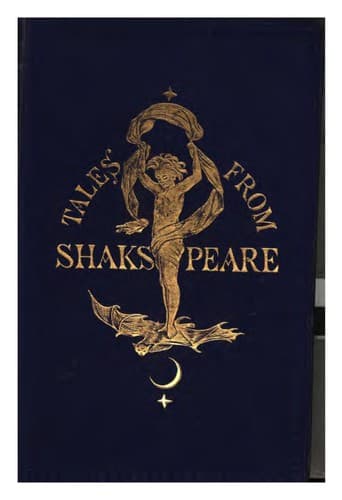
Shakespeare, William, 1564-1616 -- Adaptations; Shakespeare, William, 1564-1616 -- Stories, plots, etc. -- Juvenile literature
From this time Hamlet affected a certain wildness and strangeness
in his apparel, his speech, and behavior, and did so excellently
counterfeit the madman that the king and queen were both
deceived, and not thinking his grief for his father’s death a
sufficient cause to produce such a distemper, for they knew not
of the appearance of the ghost, they concluded that his malady
was love and they thought they had found out the object.
Before Hamlet fell into the melancholy way which has been
related he had dearly loved a fair maid called Ophelia, the
daughter of Polonius, the king’s chief counselor in affairs of
state. He had sent her letters and rings, and made many tenders
of his affection to her, and importuned her with love in
honorable fashion; and she had given belief to his vows and
importunities. But the melancholy which he fell into latterly
had made him neglect her, and from the time he conceived the
project of counterfeiting madness he affected to treat her with
unkindness and a sort of rudeness; but she, good lady, rather
than reproach him with being false to her, persuaded herself that
it was nothing but the disease in his mind, and no settled
unkindness, which had made him less observant of her than
formerly; and she compared the faculties of his once noble mind
and excellent understanding, impaired as they were with the deep
melancholy that oppressed him, to sweet bells which in themselves
are capable of most exquisite music, but when jangled out of
tune, or rudely handled, produce only a harsh and unpleasing
sound.
Though the rough business which Hamlet had in hand, the revenging
of his father’s death upon his murderer, did not suit with the
playful state of courtship, or admit of the society of so idle a
passion as love now seemed to him, yet it could not hinder but
that soft thoughts of his Ophelia would come between, and in one
of these moments, when he thought that his treatment of this
gentle lady had been unreasonably harsh, he wrote her a letter
full of wild starts of passion, and in extravagant terms, such as
agreed with his supposed madness, but mixed with some gentle
touches of affection, which could not but show to this honored
lady that a deep love for her yet lay at the bottom of his heart.
He bade her to doubt the stars were fire, and to doubt that the
sun did move, to doubt truth to be a liar, but never to doubt
that he loved; with more of such extravagant phrases. This letter
Ophelia dutifully showed to her father, and the old man thought
himself bound to communicate it to the king and queen, who from
that time supposed that the true cause of Hamlet’s madness was
love. And the queen wished that the good beauties of Ophelia
might be the happy cause of his wildness, for so she hoped that
her virtues might happily restore him to his accustomed way
again, to both their honors.
Public-domain text, read in full here on John Shaqi.
Reviews
Reviews
No reviews yet
Be the first to share your thoughts on this work.
Elsewhere in the archive
Join the Discussion
Join the discussion
Sign in to leave a comment or review.
Sign InorCreate an account