Shakespeare, William, 1564-1616 -- Adaptations; Shakespeare, William, 1564-1616 -- Stories, plots, etc. -- Juvenile literature
Produced by Suzanne Shell, Janet Blenkinship and the Online
Distributed Proofreading Team at http://www.pgdp.net
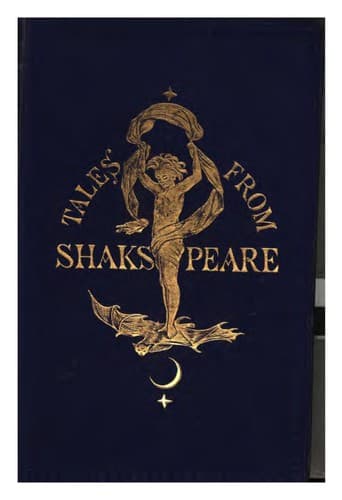
TALES FROM SHAKESPEARE
By CHARLES & MARY LAMB
ILLUSTRATED BY ARTHUR RACKHAM
_WEATHERVANE BOOKS NEW YORK_
Copyright (C) MCMLXXV by Crown Publishers, Inc.
Library of Congress Catalog Card Number: 75-18860
All rights reserved.
This edition is published by Weathervane Books, a division of Barre
Publishing Company, Inc.
Manufactured in the United States of America
PREFACE
The following Tales are meant to be submitted to the young reader as an
introduction to the study of Shakespeare, for which purpose his words
are used whenever it seemed possible to bring them in; and in whatever
has been added to give them the regular form of a connected story,
diligent care has been taken to select such words as might least
interrupt the effect of the beautiful English tongue in which he wrote:
therefore, words introduced into our language since his time have been
as far as possible avoided.
In those tales which have been taken from the Tragedies, the young
readers will perceive, when they come to see the source from which these
stories are derived, that Shakespeare's own words, with little
alteration, recur very frequently in the narrative as well as in the
dialogue; but in those made from the Comedies the writers found
themselves scarcely ever able to turn his words into the narrative form:
therefore it is feared that, in them, dialogue has been made use of too
frequently for young people not accustomed to the dramatic form of
writing. But this fault, if it be a fault, has been caused by an earnest
wish to give as much of Shakespeare's own words as possible: and if the
"_He said_," and "_She said_," the question and the reply, should
sometimes seem tedious to their young ears, they must pardon it, because
it was the only way in which could be given to them a few hints and
little foretastes of the great pleasure which awaits them in their elder
years, when they come to the rich treasures from which these small and
valueless coins are extracted; pretending to no other merit than as
faint and imperfect stamps of Shakespeare's matchless image. Faint and
imperfect images they must be called, because the beauty of his language
is too frequently destroyed by the necessity of changing many of his
excellent words into words far less expressive of his true sense, to
make it read something like prose; and even in some few places, where
his blank verse is given unaltered, as hoping from its simple plainness
to cheat the young readers into the belief that they are reading prose,
yet still his language being transplanted from its own natural soil and
wild poetic garden, it must want much of its native beauty.
Public-domain text, read in full here on John Shaqi.
Reviews
Reviews
No reviews yet
Be the first to share your thoughts on this work.
Join the Discussion
Join the discussion
Sign in to leave a comment or review.
Sign InorCreate an account