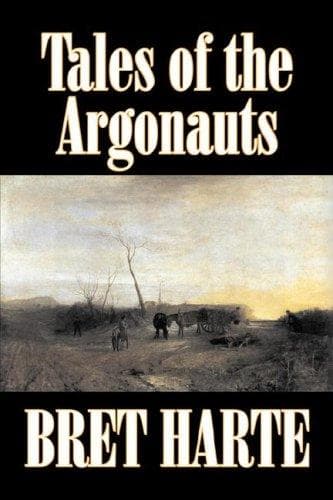
American fiction -- 19th century; Short stories; Western stories
It was a pleasant time to each. To Miss Jenny it had the charm of
novelty; and she abandoned herself to it, for that reason, much more
freely and innocently than her companion, who knew something more of the
inevitable logic of the position. I do not think, however, he had any
intention of love-making. I do not think he was at all conscious of
being in the attitude. I am quite positive he would have shrunk from the
suggestion of disloyalty to the one woman whom he admitted to himself
he loved. But, like most poets, he was much more true to an idea than
a fact, and having a very lofty conception of womanhood, with a
very sanguine nature, he saw in each new face the possibilities of a
realization of his ideal. It was, perhaps, an unfortunate thing for the
women, particularly as he brought to each trial a surprising freshness,
which was very deceptive, and quite distinct from the 'blase'
familiarity of the man of gallantry. It was this perennial virginity of
the affections that most endeared him to the best women, who were prone
to exercise toward him a chivalrous protection,--as of one likely to go
astray, unless looked after,--and indulged in the dangerous combination
of sentiment with the highest maternal instincts. It was this quality
which caused Jenny to recognize in him a certain boyishness that
required her womanly care, and even induced her to offer to accompany
him to the cross-roads when the time for his departure arrived. With her
superior knowledge of woodcraft and the locality, she would have kept
him from being lost. I wot not but that she would have protected him
from bears or wolves, but chiefly, I think, from the feline fascinations
of Mame Robinson and Lucy Rance, who might be lying in wait for this
tender young poet. Nor did she cease to be thankful that Providence had,
so to speak, delivered him as a trust into her hands.
It was a lovely night. The moon swung low, and languished softly on
the snowy ridge beyond. There were quaint odors in the still air; and a
strange incense from the woods perfumed their young blood, and seemed
to swoon in their pulses. Small wonder that they lingered on the white
road, that their feet climbed, unwillingly the little hill where they
were to part, and that, when they at last reached it, even the saving
grace of speech seemed to have forsaken them.
For there they stood alone. There was no sound nor motion in earth, or
woods, or heaven. They might have been the one man and woman for whom
this goodly earth that lay at their feet, rimmed with the deepest azure,
was created. And, seeing this, they turned toward each other with a
sudden instinct, and their hands met, and then their lips in one long
kiss.
Public-domain text, read in full here on John Shaqi.
Reviews
Reviews
No reviews yet
Be the first to share your thoughts on this work.
Join the Discussion
Join the discussion
Sign in to leave a comment or review.
Sign InorCreate an account