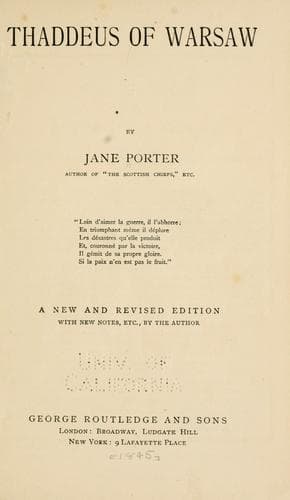
Poland -- History -- Stanislaus II Augustus, 1764-1795 -- Fiction
Thus, the Christian religion being driven from the haunts of the
great, pagan morality is raised from that prostration where, Dagon-
like, it fell at the feet of the Scriptures, and is again erected as
the idol of adoration. Guilt against Heaven fades before the decrees
of man; his law of ethics reprobates crime. But crime is only a
temporal transgression, in opposition to the general good; it draws
no consequent punishment heavier than the judgment of a broken human
law, or the resentment of the offended private parties. Morality
neither promises rewards after death nor denounces future
chastisement for error. The disciples of this independent doctrine
hold forth instances of the perfectibility of human actions, produced
by the unassisted decisions of human intellect on the limits of right
and wrong. They admire virtue, because it is beautiful. They practice
it, because it is heroic. They do not abstain from the gratification
of an intemperate wish under the belief that it is sinful, but in
obedience to their reason, which rejects the commission of a vicious
act because it is uncomely. In the first case, God is their judge; in
the latter, themselves. The comparison need only be proposed, to
humble the pride that made it necessary. How do these systematizers
refine and subtilize? How do they dwell on the principle of virtue,
and turn it in every metaphysical light, until their philosophy
rarifies it to nothing! Some degrade, and others abandon, the only
basis on which an upright character can stand with firmness. The
bulwark which Revelation erected between the passions and the soul is
levelled first; and then that instinctive rule of right which the
modern casuist denominates the citadel of virtue falls of course.
By such gradations the progress of depravity is accomplished; and the
general leaven having worked to Lady Sara's mind on such premises,
(though she might not arrange them so distinctly,) she deduced that
what is called conjugal right is a mere establishment of man, and
might be extended or limited by him to any length he pleased. For
instance, the Turks were not content with one wife, but appropriated
hundreds to one man; and because such indulgence was permitted by
Mohammed, no other nation presumed to call them culpable.
Public-domain text, read in full here on John Shaqi.
Reviews
Reviews
No reviews yet
Be the first to share your thoughts on this work.
Elsewhere in the archive
Join the Discussion
Join the discussion
Sign in to leave a comment or review.
Sign InorCreate an account