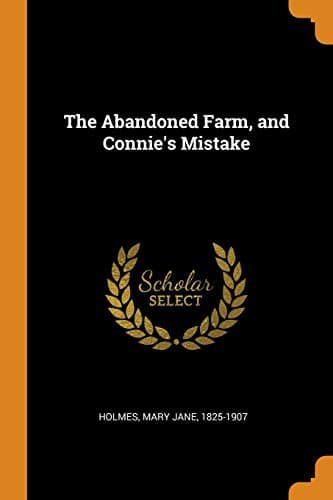
The abandoned farm, and Connie's mistakeHolmes, Mary Jane
General
The abandoned farm, and Connie's mistake
Holmes, Mary Jane
American fiction -- 20th century
people, and it was his boast that he had at some time loaned money to
more than half of his more intimate acquaintances to tide them over some
difficulty. He was proud of himself as a money lender,—proud that he
could afford to wear plain clothes, live far down town and drive old
Whitey. Sherry, however, did not seem quite in keeping with the old
horse and buggy. Something in her face made him think of the grand
turnouts and the ladies who graced them; and when the drive in the park
was suggested, he thought to have a handsome carriage and “show her off
with the best of ’em.” But his more frugal wife suggested that this
would be quite an expense after the opera box, and though Sherry might
grace any carriage he could hire, he would be out of place in his old
gray coat and hat. So the carriage was given up and the drive taken
behind Whitey. Sherry enjoyed it immensely, and saw Alex. Marsh, who
Uncle Pledger told her “was a swell man, but about as good as they made
’em,” and knew that he drove behind them on their way home, and called
afterwards to inquire about his Uncle Amos, who owned the farm where her
great-grandfather once lived, but she thought no more about him.
Since that time her father had died, leaving his family, as clergymen’s
families frequently are left, with little to depend upon besides their
own exertions. They owned the house they lived in; there had been a life
insurance, and Kate was teaching in a graded school. Sherry, who was the
cleverest of housekeepers, and saved her delicate mother in every
possible way, was doing nothing, and had puzzled her brain until it
ached over the problem as to what she could do. She wanted to see the
world and to earn some money at the same time, and here was her chance.
The waitress part did not disturb her at all. She would still be Fanny
Sheridan Sherman, although she did not intend to make any capital out of
that or expect any favors. She would go like the rest of the girls and
be one of them. She was rather self-willed when her mind was made up,
and overcoming her mother’s and sister’s scruples, she wrote to Mrs.
Groves in New York, asking for a situation as waitress at Maplehurst.
“I hope you told her about Aunt Pledger, and that you were a clergyman’s
daughter and a lady,” Katy said, and Sherry replied:
“Indeed I didn’t! I just asked for the place and signed myself ‘Fanny S.
Sherman.’ I’m going to be Fanny up there and leave Sherry behind with
the rest of me.”
In a few days Mrs. Groves’ answer came, very stiffly worded, to the
effect that Mrs. Groves would see her on a certain day at a certain
hour, and would expect references as to character and ability.
“I told you so,” Katy said. “References from the last lady you worked
for.”
Public-domain text, read in full here on John Shaqi.
Reviews
Reviews
No reviews yet
Be the first to share your thoughts on this work.
Join the Discussion
Join the discussion
Sign in to leave a comment or review.
Sign InorCreate an account