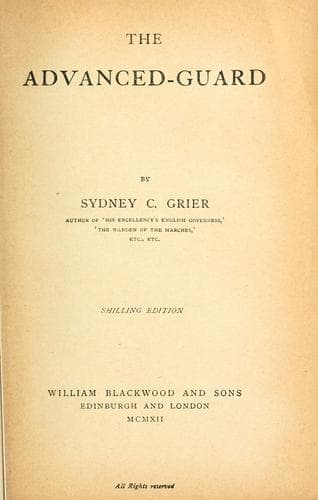
British -- Asia -- Fiction; Man-woman relationships -- Fiction; Soldiers -- Fiction
It was a poor thing to nip raids in the bud, or
arrest them when they were only just begun: a big raid, followed by
big reprisals, was the sort of thing that lent zest to frontier-life
and stimulated promotion. However, Major Keeling’s whole soul was set
against thrilling experiences of this kind, and Ferrers was forced to
submit. But his love of fighting was as strong as ever, and had led to
the very awkward and unfortunate incident which he was now to do his
best to explain at Alibad, whither he had been called by a peremptory
summons.
The root, occasion, or opportunity of all crime on the border at this
time was the practice of carrying arms, which had grown up among the
inhabitants during many years of oppression from above and incursions
from without. Now that protection was assured them, the custom was
unnecessary and dangerous, and any man appearing with weapons was
liable to have them confiscated--the people grumbling, but submitting.
Hence, when word was brought to Ferrers that a company of armed men
had been seen traversing the lands of one of the villages in his
charge, it was natural to conclude that they were raiders from beyond
the border, who had escaped the vigilance of the patrols, and hoped to
harry the countryside. Ferrers at once started in pursuit, and the
armed men, their weapons laid aside, were discovered in the village
cornfields, busily engaged in gathering in the crop. The impudence
displayed fired Ferrers, and he ordered his men to charge. His
_daffadar_, a veteran soldier, ventured to advise delay and a parley,
but he refused to listen. He meant to make an example of this party of
robbers, not to offer them terms, and a moment later his troopers were
riding down the startled reapers. These made no attempt to resist,
though they filled the air with protests, and before the troop could
wheel and ride through them again, a voice reached Ferrers’ ear which
turned him sick with horror.
“Sahib! sahib!” it cried, “we are the Sarkar’s poor ryots! Why do you
kill us?”
Public-domain text, read in full here on John Shaqi.
Reviews
Reviews
No reviews yet
Be the first to share your thoughts on this work.
Join the Discussion
Join the discussion
Sign in to leave a comment or review.
Sign InorCreate an account