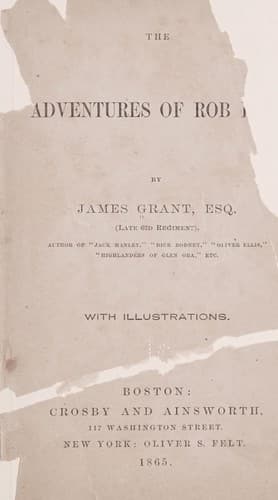
Biographical fiction; Historical fiction; Outlaws -- Fiction; Rob Roy, 1671-1734 -- Fiction; Scotland -- History -- 1689-1745 -- Fiction
Morrar na Shean was furious with disappointment; he reviled Bishop
Adam, and threatened to burn his cathedral, where prayers had proved
of so little avail. Then for days and nights he sat drinking with
John of Harpidale and Thorolf Starkadder; and thereafter ordering his
great galley to be got in readiness, they put to sea, and were driven
by a storm so far as Rona, a lonely isle which lies far amid the
Atlantic sea, thirty leagues westward of the Orcades. In Rona was a
little chapel, dedicated by a chief of the isles to St. Ronan, and it
was said to be guarded by an unseen spirit; for if any person in the
island died and a shovel was placed near the altar overnight, a grave
was found ready dug in the morning.
The place was lonely and solemn, for no sound was ever heard there
but the sough of the gusty sea-breeze, and the mournful moan of the
white waves as they clomb the echoing rocks.
Sad and soothing as was the scene, yet in sheer despite at being
driven so far away, Morrar and his followers ravaged this poor place,
destroyed the chapel, and slew some of the people on the adjacent
island of Suliska. But the vengeance of Heaven pursued them; for
when returning, the great galley struck upon the Clett, a rock four
hundred feet in height, near the entrance of Thurso Bay, and many of
her crew were drowned.
Prior to this, Morrar na Shean had ceased to address Heaven, and now
appealed to the idols of his forefathers. He visited the Temple of
the Moon in Innistore, and at midnight, with strange barbaric rites,
on his bare knees, spilt some of his blood by the self-inflicted stab
of a dagger, on the central stone of Power.
This was a great obelisk carved with serpents, and the jormagundror
great sea-snake, the emblem of eternity; and with many mystic emblems
and Runic inscriptions; and there between midnight and morn, he
prayed for the assistance of the Moon, of Odin, and Thor. But all
this mummery was vain; for on his return he found that the countess
had given birth to _a second daughter_, whom she had named Erica; and
in the blindness of his wrath the earl struck her with his hand
clenched in his steel glove, and threatened to toss the child from
the windows of Braal into the Thurso.
Again with John of Harpidale, with the long-bearded Thorolf, and
other roysterers, he put to sea in the great galley, and sailed into
the Baltic, where they aided King Waldemar in the destruction of the
famous city of Iomsberg, the stronghold of the northern pirates, whom
on his return the earl imitated, for he destroyed several towns on
the shores of the Baltic, and robbed the churches of their holy
vessels. Then the earl sought the aid of enchanters and wizards, and
passed whole nights in dark caverns and pine forests, where Druid
circles stood, hoping to see elves, demons, gnomes, or fairies, but
sought in vain.
Public-domain text, read in full here on John Shaqi.
Reviews
Reviews
No reviews yet
Be the first to share your thoughts on this work.
Elsewhere in the archive
Join the Discussion
Join the discussion
Sign in to leave a comment or review.
Sign InorCreate an account