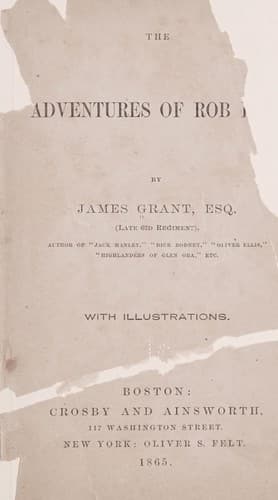
Biographical fiction; Historical fiction; Outlaws -- Fiction; Rob Roy, 1671-1734 -- Fiction; Scotland -- History -- 1689-1745 -- Fiction
Affrays were frequent at those fairs, and, indeed, everywhere else in
Scotland: political and religious differences made men rancorous, and
arms were readily resorted to. It was not until 1727 that the
Provost of Edinburgh prohibited wearing of pistols and daggers openly
in the streets of the city, for brawls had become incessant.
"It may well be supposed that in those days no Lowland, and much less
English drovers, _ventured into the Highlands_," says Scott. "The
cattle, which were the staple commodity of the mountains, were
escorted down to the fairs by a party of Highlanders, with all their
arms rattling about them, and who dealt, however, in all honour and
faith with their southern customers. A fray, indeed, would sometimes
arise, when the Lowland men, chiefly Borderers, who had to supply the
English market, used to dip their bonnets in the next brook, and
wrapping them round their hands, oppose the cudgels to the naked
broadsword, which had not always the superiority. I have heard from
aged persons who had been in such affrays, that the Highlanders used
remarkably fair play, never using the point of the sword, far less
their pistols or daggers; so that a slash or two, or a broken head,
was easily accommodated; and as the trade was of benefit to both
parties, trifling skirmishes were not allowed to interrupt its
harmony."
King William having restored all the severe laws against the clan,
Rob was compelled to resume the name of Campbell, when in 1703, his
nephew, Gregor Glun Dhu, who was likewise compelled to call himself
James Graham, was married to Mary Hamilton of Bardowie, in the
November of that year, and our hero signed their contract as "Robert
Campbell of Inversnaid."
While he was acquiring wealth and popularity of a local and peaceful
kind by his frequent visits to the Borders, his wife, Helen Mary,
managed his household at Inversnaid, and earned the reputation of
being a thrifty, active, and careful housewife. Gentle in manner,
and gently bred, she could play the old Highland harp with great
skill, as she had been taught by Rori Dall, or Blind Roderick, who
was bard to MacLeod of that Ilk, and was, moreover, the _last_ harper
of the Hebrides.
A Highland housewife had plenty of occupation in those days. The
corn was then dressed in an ancient fashion by the women. The straw
was fired, that the heat might parch the grain, which, though
blackened, was gathered into the handmills, or querns, and ground
into meal or flour, just as the Israelites ground theirs of old.
They had also the management of the sheep. No flocks were then kept
in the Highlands; but every family had from the Hebrides a few sheep
of a small breed, which were never permitted to range the mountain
but were carefully housed at night.
Public-domain text, read in full here on John Shaqi.
Reviews
Reviews
No reviews yet
Be the first to share your thoughts on this work.
Join the Discussion
Join the discussion
Sign in to leave a comment or review.
Sign InorCreate an account