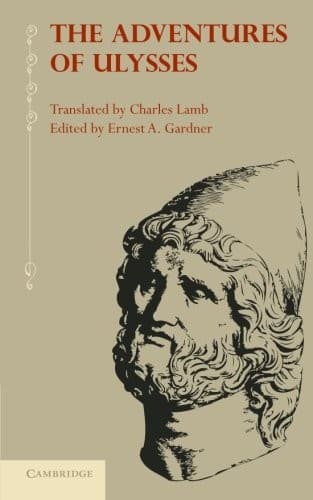
Homer. Odyssey -- Adaptations; Odysseus, King of Ithaca (Mythological character) -- Juvenile literature
Forth they sailed, but with far different hopes than when they left the
same harbour the first time with all the winds confined, only the west
wind suffered to play upon their sails to waft them in gentle murmurs to
Ithaca. They were now the sport of every gale that blew, and despaired of
ever seeing home more. Now those covetous mariners were cured of their
surfeit for gold, and would not have touched it if it had lain in untold
heaps before them.
Six days and nights they drove along, and on the seventh day they put into
Lamos, a port of the Laestrygonians. So spacious this harbour was that it
held with ease all their fleet, which rode at anchor, safe from any
storms, all but the ship in which Ulysses was embarked. He, as if
prophetic of the mischance which followed, kept still without the harbour,
making fast his bark to a rock at the land's point, which he climbed with
purpose to survey the country. He saw a city with smoke ascending from the
roofs, but neither ploughs going, nor oxen yoked, nor any sign of
agricultural works. Making choice of two men, he sent them to the city to
explore what sort of inhabitants dwelt there. His messengers had not gone
far before they met a damsel, of stature surpassing human, who was coming
to draw water from a spring. They asked her who dwelt in that land. She
made no reply, but led them in silence to her father's palace. He was a
monarch, and named Antiphas. He and all his people were giants. When they
entered the palace, a woman, the mother of the damsel, but far taller than
she, rushed abroad and called for Antiphas. He came, and snatching up one
of the two men, made as if he would devour him. The other fled. Antiphas
raised a mighty shout, and instantly, this way and that, multitudes of
gigantic people issued out at the gates, and, making for the harbour, tore
up huge pieces of the rocks and flung them at the ships which lay there,
all which they utterly overwhelmed and sank; and the unfortunate bodies of
men which floated, and which the sea did not devour, these cannibals
thrust through with harpoons, like fishes, and bore them off to their dire
feast. Ulysses with his single bark, that had never entered the harbour,
escaped; that bark which was now the only vessel left of all the gallant
navy that had set sail with him from Troy. He pushed off from the shore,
cheering the sad remnant of his men, whom horror at the sight of their
countrymen's fate had almost turned to marble.
CHAPTER TWO
The House of Circe.--Men changed into Beasts.--The Voyage to Hell.--The
Banquet of the Dead.
On went the single ship till it came to the island of Aeaea, where Circe,
the dreadful daughter of the Sun, dwelt. She was deeply skilled in magic,
a haughty beauty, and had hair like the Sun. The Sun was her parent, and
begot her and her brother Aeaetes (such another as herself) upon Perse,
daughter to Oceanus.
Public-domain text, read in full here on John Shaqi.
Reviews
Reviews
No reviews yet
Be the first to share your thoughts on this work.
Join the Discussion
Join the discussion
Sign in to leave a comment or review.
Sign InorCreate an account