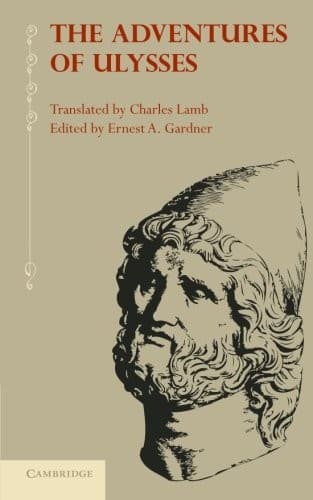
Homer. Odyssey -- Adaptations; Odysseus, King of Ithaca (Mythological character) -- Juvenile literature
They faithfully obeyed, and remained in that good mind for a month, during
which they were confined to that station by contrary winds, till all the
wine and the bread were gone which they had brought with them. When their
victuals were gone, necessity compelled them to stray in quest of whatever
fish or fowl they could snare, which that coast did not yield in any great
abundance. Then Ulysses prayed to all the gods that dwelt in bountiful
heaven, that they would be pleased to yield them some means to stay their
hunger without having recourse to profane and forbidden violations; but
the ears of heaven seemed to be shut, or some god incensed plotted his
ruin; for at midday, when he should chiefly have been vigilant and
watchful to prevent mischief, a deep sleep fell upon the eyes of Ulysses,
during which he lay totally insensible of all that passed in the world,
and what his friends or what his enemies might do for his welfare or
destruction. Then Eurylochus took his advantage. He was the man of most
authority with them after Ulysses. He represented to them all the misery
of their condition; how that every death is hateful and grievous to
mortality, but that of all deaths famine is attended with the most
painful, loathsome, and humiliating circumstances; that the subsistence
which they could hope to draw from fowling or fishing was too precarious
to be depended upon; that there did not seem to be any chance of the winds
changing to favour their escape, but that they must inevitably stay there
and perish, if they let an irrational superstition deter them from the
means which nature offered to their hands; that Ulysses might be deceived
in his belief that these oxen had any sacred qualities above other oxen;
and even admitting that they were the property of the god of the Sun, as
he said they were, the Sun did neither eat nor drink, and the gods were
best served not by a scrupulous conscience, but by a thankful heart, which
took freely what they as freely offered: with these and such like
persuasions he prevailed on his half-famished and half-mutinous companions
to begin the impious violation of their oath by the slaughter of seven of
the fairest of these oxen which were grazing. Part they roasted and eat,
and part they offered in sacrifice to the gods, particularly to Apollo,
god of the Sun, vowing to build a temple to his godhead when they should
arrive in Ithaca, and deck it with magnificent and numerous gifts. Vain
men! and superstition worse than that which they so lately derided! to
imagine that prospective penitence can excuse a present violation of duty,
and that the pure natures of the heavenly powers will admit of compromise
or dispensation for sin.
Public-domain text, read in full here on John Shaqi.
Reviews
Reviews
No reviews yet
Be the first to share your thoughts on this work.
Join the Discussion
Join the discussion
Sign in to leave a comment or review.
Sign InorCreate an account