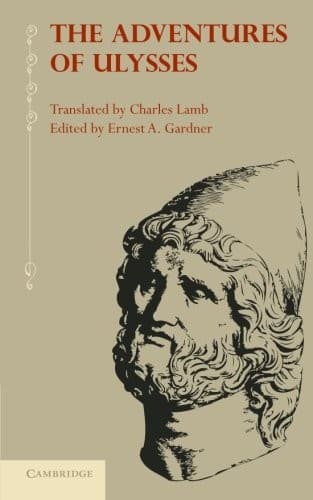
Homer. Odyssey -- Adaptations; Odysseus, King of Ithaca (Mythological character) -- Juvenile literature
And now the sheep began to issue forth very fast; the males went first,
the females, unmilked, stood by, bleating and requiring the hand of their
shepherd in vain to milk them, their full bags sore with being unemptied,
but he much sorer with the loss of sight. Still, as the males passed, he
felt the backs of those fleecy fools, never dreaming that they carried his
enemies under their bellies; so they passed on till the last ram came
loaded with his wool and Ulysses together. He stopped that ram and felt
him, and had his hand once in the hair of Ulysses, yet knew it not, and he
chid the ram for being last, and spoke to it as if it understood him, and
asked it whether it did not wish that its master had his eye again, which
that abominable Noman with his execrable rout had put out, when they had
got him down with wine; and he willed the ram to tell him whereabouts in
the cave his enemy lurked, that he might dash his brains and strew them
about, to ease his heart of that tormenting revenge which rankled in it.
After a deal of such foolish talk to the beast, he let it go.
When Ulysses found himself free, he let go his hold, and assisted in
disengaging his friends. The rams which had befriended them they carried
off with them to the ships, where their companions with tears in their
eyes received them, as men escaped from death. They plied their oars, and
set their sails, and when they were got as far off from shore as a voice
could reach, Ulysses cried out to the Cyclop: "Cyclop, thou shouldst not
have so much abused thy monstrous strength, as to devour thy guests. Jove
by my hand sends thee requital to pay thy savage inhumanity." The Cyclop
heard, and came forth enraged, and in his anger he plucked a fragment of a
rock, and threw it with blind fury at the ships. It narrowly escaped
lighting upon the bark in which Ulysses sat, but with the fall it raised
so fierce an ebb as bore back the ship till it almost touched the shore.
"Cyclop," said Ulysses, "if any ask thee who imposed on thee that
unsightly blemish in thine eye, say it was Ulysses, son of Laertes: the
king of Ithaca am I called, the waster of cities." Then they crowded sail,
and beat the old sea, and forth they went with a forward gale; sad for
fore-past losses, yet glad to have escaped at any rate; till they came to
the isle where Aeolus reigned, who is god of the winds.
Public-domain text, read in full here on John Shaqi.
Reviews
Reviews
No reviews yet
Be the first to share your thoughts on this work.
Join the Discussion
Join the discussion
Sign in to leave a comment or review.
Sign InorCreate an account