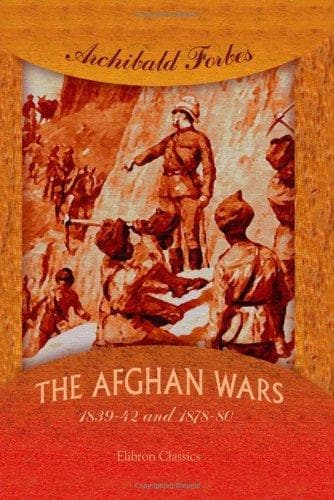
The Afghan Wars 1839-42 and 1878-80Forbes, Archibald
History
The Afghan Wars 1839-42 and 1878-80
Forbes, Archibald
Afghan Wars
their countrymen, the hostages quartered on the Balla Hissar. They were
able to obtain money from the Cabul usurers, and thus to supply
themselves with suitable clothing and additions to their rations, and
their mails from India and Jellalabad were forwarded to them without
hindrance. The summer months were passed in captivity, but it was no
longer for them a captivity of squalor and wretchedness. Life was a good
deal better worth living in the pleasant garden house on the bank of the
Logur than it had been in the noisome squalor of Budiabad and the
vermin-infested huddlement of Zandeh. But they still-lived under the
long strain of anxiety and apprehension, for none of them knew what the
morrow might bring forth. While residing in the pleasant quarters in the
Logur valley the captives of the passes were joined by nine officers,
who were the captives of Ghuznee. After the capitulation the latter had
been treated with cruel harshness, shut up in one small room, and
debarred from fresh air and exercise. Colonel Palmer, indeed, had
undergone the barbarity of torture in the endeavour to force him to
disclose the whereabouts of treasure which he was suspected of having
buried.
Akbar had full and timely intimation of the mutual intention of the
British generals at Jellalabad and Candahar to march on Cabul, and did
not fail to recognise of what value to him in extremity might be his
continued possession of the prisoners. They had been warned of their
probable deportation to the remote and rugged Bamian; and the toilsome
journey thither was begun on the evening of August 25th. A couple of
ailing families alone, with a surgeon in charge of them, were allowed to
remain behind; all the others, hale and sick, had to travel, the former
on horseback, the latter carried in camel panniers. The escort consisted
of an irregular regiment of Afghan infantry commanded by one Saleh
Mahomed Khan, who when a subadar serving in one of the Shah's Afghan
regiments had deserted to Dost Mahomed. The wayfarers, female as well as
male, wore the Afghan costume, in order that they might attract as
little notice as possible.
Public-domain text, read in full here on John Shaqi.
Reviews
Reviews
No reviews yet
Be the first to share your thoughts on this work.
Elsewhere in the archive
Join the Discussion
Join the discussion
Sign in to leave a comment or review.
Sign InorCreate an account