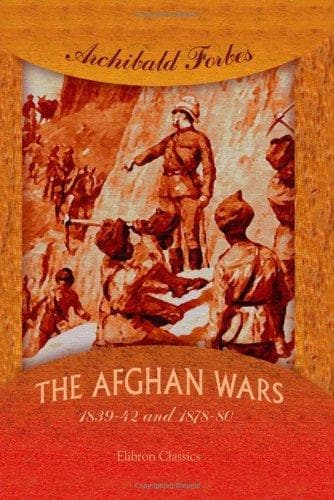
The Afghan Wars 1839-42 and 1878-80Forbes, Archibald
History
The Afghan Wars 1839-42 and 1878-80
Forbes, Archibald
Afghan Wars
Little more remains to be told. There was an Afghan force still in arms
at Istalif, a beautiful village of the inveterately hostile Kohistanees;
a division marched to attack it, carried the place by assault, burnt
part of it, and severely smote the garrison. Utter destruction was the
fate of Charikar, the capital of the Kohistan, where Codrington's
Goorkha regiment had been destroyed. Pollock determined to 'set a mark'
on Cabul to commemorate the retribution which the British had exacted.
He spared the Balla Hissar, and abstained from laying the city in ruins,
contenting himself with the destruction of the principal bazaar, through
which the heads of Macnaghten and Burnes had been paraded, and in which
their mangled bodies had been exposed. Prince Futteh Jung, tired of his
vicissitudes in the character of an Afghan monarch, ceded what of a
throne he possessed to another puppet of his race, and gladly
accompanied the British armies to India. Other waifs of the wreck of a
nefarious and disastrous enterprise, among them old Zemaun Khan, who had
been our friend throughout, and the family of the ill-fated Shah Soojah,
were well content to return to the exile which afforded safety and
quietude. There also accompanied the march of the humane Pollock a great
number of the mutilated and crippled camp followers of Elphinstone's
army who had escaped with their lives from its destruction. On the 12th
of October the forces of Pollock and of Nott turned their backs on
Cabul, which no British army was again to see for nearly forty years,
and set out on their march down the passes. Jellalabad and Ali Musjid
were partially destroyed in passing. Pollock's division reached Peshawur
without loss, thanks to the precautions of its chief; but with M'Caskill
and Nott the indomitable Afghans had the last word, cutting off their
stragglers, capturing their baggage, and in the final skirmish killing
and wounding some sixty men of Nott's command.
Of the bombastic and grotesque paeans of triumph emitted by Lord
Ellenborough, whose head had been turned by a success to which he had
but scantly contributed, nothing need now be said, nor of the garish
pageant with which he received the armies as they re-entered British
territory at Ferozepore. As they passed down through the Punjaub, Dost
Mahomed passed up on his way to reoccupy the position from which he had
been driven. And so ended the first Afghan war, a period of history in
which no redeeming features are perceptible except the defence of
Jellalabad, the dogged firmness of Nott, and Pollock's noble and
successful constancy of purpose. Beyond this effulgence there spreads a
sombre welter of misrepresentation and unscrupulousness, intrigue, moral
deterioration, and dishonour unspeakable.
PART II: THE SECOND AFGHAN WAR
CHAPTER I: THE FIRST CAMPAIGN
Public-domain text, read in full here on John Shaqi.
Reviews
Reviews
No reviews yet
Be the first to share your thoughts on this work.
Elsewhere in the archive
Join the Discussion
Join the discussion
Sign in to leave a comment or review.
Sign InorCreate an account