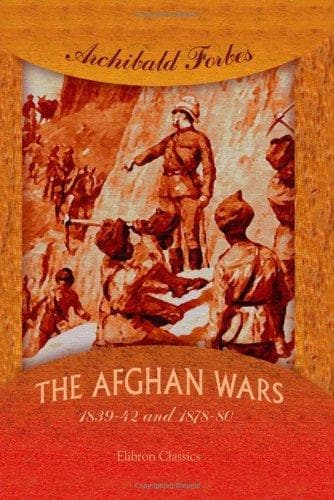
The Afghan Wars 1839-42 and 1878-80Forbes, Archibald
History
The Afghan Wars 1839-42 and 1878-80
Forbes, Archibald
Afghan Wars
An Afghan who had sat at Kaufmann's feet, Abdurrahman was not wholly a
guileless man; and the truth probably was that he mistrusted the Greeks
of Simla and the gifts they tendered him with so lavish protestation
that they were entirely for his own interest. There was very little
finesse about the importunity of the British that he should constitute
himself their bridge of extrication, so that they might get out of
Afghanistan without the dangers and discredit of leaving chaos behind
them. But Abdurrahman had come to know himself strong enough to reduce
to order that legacy of chaos if it should be left; and in view of his
future relations with his fellow Afghans he was not solicitous to be
beholden to the foreigners to any embarrassing extent. He knew, too, the
wisdom of 'masterly inactivity' in delicate conditions. And, again, he
had no confidence in our pledges. On the 4th of August, the day after
the meeting between him and Mr Griffin at Zimma, the latter wrote: 'They
(Abdurrahman and his advisers) feared greatly our intention was to rid
ourselves of a formidable opponent, and dreaded that if he had come
straight into Cabul he would have been arrested, and deported to India.'
A Liberal Government was now in office in England, and was urgent for
the speedy evacuation of Afghanistan. Lord Lytton had resigned and had
been succeeded as Viceroy by the Marquis of Ripon. Lieutenant-General
Sir Donald Stewart was in chief command at Cabul. A great number of
letters from Abdurrahman to chiefs and influential persons throughout
Afghanistan were being intercepted, the tone of which was considered
objectionable. He was reported to be in close correspondence with
Mahomed Jan, who had never ceased to be our bitter enemy. The fact that
negotiations were in progress between the British Government and
Abdurrahman had become matter of general knowledge throughout the
country, and was occasioning disquietude and excitement. So clear were
held the evidences of what was termed Abdurrahman's bad faith, but was
probably a combination of genuine mistrust, astute passivity, and shrewd
playing for his own hand, that it became a serious question with the
Indian Government on the arrival of the new Viceroy, whether it was good
policy to have anything more to do with him. It was resolved that before
breaking off intercourse the suggestion of Sir Donald Stewart and Mr
Griffin should be adopted, that a peremptory although still friendly
letter, demanding a definite acceptance or refusal of the proffers made,
within four days after the receipt, should be sent to Abdurrahman, with
a detailed explanation of the arrangements into which we were prepared
to enter with regard to him and the future of Afghanistan. A letter was
forwarded from Cabul on 14th June, in which Mr Griffin informed the
Sirdar that since the British Government admitted no right of
interference by foreign powers in Afghanistan, it was plain that the
Public-domain text, read in full here on John Shaqi.
Reviews
Reviews
No reviews yet
Be the first to share your thoughts on this work.
Elsewhere in the archive
Join the Discussion
Join the discussion
Sign in to leave a comment or review.
Sign InorCreate an account