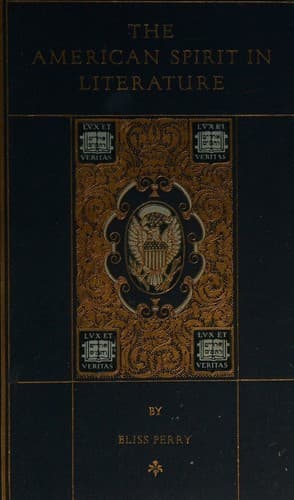
The American Spirit in Literature: A Chronicle of Great InterpretersPerry, Bliss
History
The American Spirit in Literature: A Chronicle of Great Interpreters
Perry, Bliss
American literature -- History and criticism
To understand the literary leadership of New England during the thirty
years immediately preceding the Civil War it is necessary to recall the
characteristics of a somewhat isolated and peculiar people. The mental
and moral traits of the New England colonists, already glanced at in an
earlier chapter, had suffered little essential modification in two
hundred years. The original racial stock was still dominant. As compared
with the middle and southern colonies, there was relatively little
immigration, and this was easily assimilated. The physical remoteness of
New England from other sections of the country, and the stubborn loyalty
with which its inhabitants maintained their own standards of life, alike
contributed to their sense of separateness. It is true, of course, that
their mode of thinking and feeling had undergone certain changes. They
were among the earliest theorists of political independence from Great
Britain, and had done their share, and more, in the Revolution. The
rigors of their early creed had somewhat relaxed, as we have seen, by
the end of the seventeenth century, and throughout the eighteenth there
was a gradual progress toward religious liberalism. The population
steadily increased, and New England's unremitting struggle with a not
too friendly soil, her hardihood upon the seas, and her keenness in
trade, became proverbial throughout the country. Her seaport towns were
wealthy. The general standards of living remained frugal, but extreme
poverty was rare. Her people still made, as in the earliest days of the
colonies, silent and unquestioned sacrifices for education, and her
chief seats of learning, Harvard and Yale, remained the foremost
educational centers of America. But there was still scant leisure for
the quest of beauty, and slender material reward for any practitioner of
the fine arts. Oratory alone, among the arts of expression, commanded
popular interest and applause. Daniel Webster's audiences at Plymouth in
1820 and at Bunker Hill in 1825 were not inferior to similar audiences
of today in intelligence and in responsiveness. Perhaps they were
superior. Appreciation of the spoken word was natural to men trained by
generations of thoughtful listening to "painful" preaching and by
participation in the discussions of town-meeting. Yet appreciation of
secular literature was rare, and interest in the other arts was almost
non-existent.
Public-domain text, read in full here on John Shaqi.
Reviews
Reviews
No reviews yet
Be the first to share your thoughts on this work.
Elsewhere in the archive
Join the Discussion
Join the discussion
Sign in to leave a comment or review.
Sign InorCreate an account