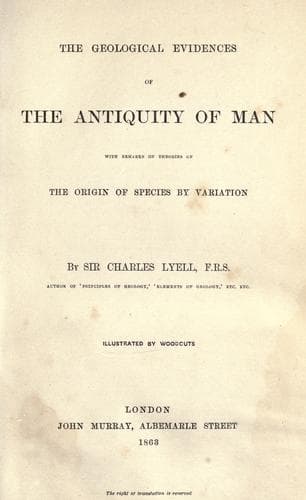
Evolution (Biology); Glacial epoch; Human beings -- Origin; Human evolution
I endeavoured to sketch out (and it was, I believe, the first systematic
attempt to accomplish such a task) the laws which govern the extinction
of species, with a view of showing that the slow but ceaseless
variations now in progress in physical geography, together with the
migration of plants and animals into new regions, must in the course
of ages give rise to the occasional loss of some of them and eventually
cause an entire fauna and flora to die out; also that we must infer from
geological data that the places thus left vacant from time to time
are filled up without delay by new forms adapted to new conditions,
sometimes by immigration from adjoining provinces, sometimes by new
creations. Among the many causes of extinction enumerated by me were the
power of hostile species, diminution of food, mutations in climate, the
conversion of land into sea and of sea into land, etc. I firmly opposed
Brocchi's hypothesis of a decline in the vital energy of each species;*
maintaining that there was every reason to believe that the reproductive
powers of the last surviving representatives of a species were as
vigorous as those of their predecessors, and that they were as capable,
under favourable circumstances, of repeopling the earth with their kind.
(* "Principles of Geology" 1st edition volume 2 chapter 8;
and 9th edition page 668.)
The manner in which some species are now becoming scarce and dying out,
one after the other, appeared to me to favour the doctrine of the fixity
of the specific character, showing a want of pliancy and capability of
varying, which ensured their annihilation whenever changes adverse
to their well-being occurred; time not being allowed for such a
transformation as might be conceived capable of adapting them to the new
circumstances, and of converting them into what naturalists would call
new species.*
(* Laws of Extinction, "Principles of Geology" 1st edition
1832 volume 2 chapters 5 to 11 inclusive; and 9th edition
chapters 37 to 42 inclusive 1853.)
Public-domain text, read in full here on John Shaqi.
Reviews
Reviews
No reviews yet
Be the first to share your thoughts on this work.
Elsewhere in the archive
Join the Discussion
Join the discussion
Sign in to leave a comment or review.
Sign InorCreate an account