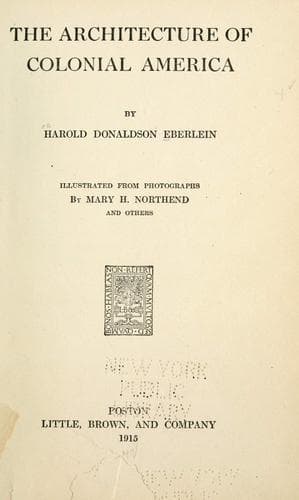
The Architecture of Colonial AmericaEberlein, Harold Donaldson
History
The Architecture of Colonial America
Eberlein, Harold Donaldson
Architecture -- United States; Architecture, Colonial
The Bulfinch State House, a “model of classicality” as someone has not
inappropriately called it, is an exceptionally impressive precursor of
the Greek or Classic Revival. Designed at a time when the graceful
interpretation of the Georgian style, introduced by the Brothers Adam,
was still dominant, it combines the characteristic elegance of its epoch
with the bold vigour of classic inspiration, drawn direct from the font
of antiquity, that distinguished the best public architecture of the
early nineteenth century. Despite the alterations and additions to which
it has been subjected, its strong individuality still dominates the
structure, of which the original fabric is now but a small part, and
breathes abroad the ample spirit of post-Colonial dignity.
The original buildings of Harvard, or rather the worthy successors of
the first buildings, none of which remain, exhibit, in their plan,
proportions and general treatment, many admirable features quite
comparable to those of the best contemporary large Georgian buildings in
England and their substantial dignity, thoroughly in keeping with their
purpose, reflects the greatest credit upon the Colonial officers and
benefactors of the University.
Of the other Colonial or post-Colonial secular public buildings in New
England deserving of admiration and close study, all of which it would
be a congenial task to write about at length, did space permit, three
especially must be mentioned before passing on to discuss those in
another part of the country. They are the Custom House in Salem, which
will always be associated with the fanciful melancholy of Hawthorne’s
literary genius; the Town House or State House at Newport, built in 1743
from the designs of Richard Munday and, last of all, the Market or City
Hall, in the same place, built in 1760 after the plans of Peter
Harrison, sometime an assistant to Sir John Vanbrugh, whose close
connexion with that eminent English architect and subsequent removal to
the American Colonies throw an interesting side light upon the bonds
linking Colonial architectural developments with their source of
inspiration.
New York could boast the stately old building of King’s College;
Fraunce’s Tavern, whose festive board, upon the occasion of balls and
receptions, groaning with toothsome viands, caused the feasters to groan
with gout the next day; the City Hall, begun in 1803, whose chaste
classic elegance, surrounded by huge modern structures, still bears
eloquent witness to the civic good taste of the period when it was
erected. Henry James was greatly impressed with its “perfect taste and
finish, the reduced, yet ample, scale, the harmony of the parts, the
just proportions, the modest classic grace, the living look of the type
aimed at.” On looking at such noble examples of the architecture of a
past generation, one cannot but regret that the ruthless sweep of
commercial progress has brushed aside and demolished so many monuments
of the New York of Colonial days.
Public-domain text, read in full here on John Shaqi.
Reviews
Reviews
No reviews yet
Be the first to share your thoughts on this work.
Elsewhere in the archive
Join the Discussion
Join the discussion
Sign in to leave a comment or review.
Sign InorCreate an account