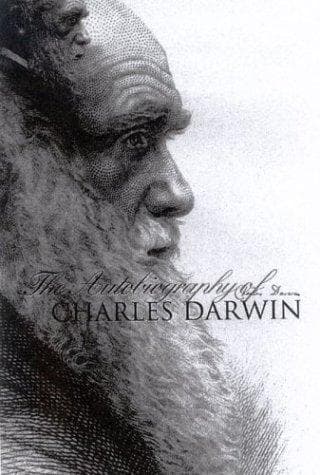
The Autobiography of Charles DarwinDarwin, Charles
Science
The Autobiography of Charles Darwin
Darwin, Charles
Darwin, Charles, 1809-1882; Darwin, Charles, 1809-1882. On the origin of species; Naturalists -- Great Britain -- Biography
I have said that in one respect my mind has changed during the last
twenty or thirty years. Up to the age of thirty, or beyond it, poetry
of many kinds, such as the works of Milton, Gray, Byron, Wordsworth,
Coleridge, and Shelley, gave me great pleasure, and even as a schoolboy
I took intense delight in Shakespeare, especially in the historical
plays. I have also said that formerly pictures gave me considerable,
and music very great delight. But now for many years I cannot endure to
read a line of poetry: I have tried lately to read Shakespeare, and
found it so intolerably dull that it nauseated me. I have also almost
lost my taste for pictures or music. Music generally sets me thinking
too energetically on what I have been at work on, instead of giving me
pleasure. I retain some taste for fine scenery, but it does not cause
me the exquisite delight which it formerly did. On the other hand,
novels which are works of the imagination, though not of a very high
order, have been for years a wonderful relief and pleasure to me, and I
often bless all novelists. A surprising number have been read aloud to
me, and I like all if moderately good, and if they do not end
unhappily—against which a law ought to be passed. A novel, according to
my taste, does not come into the first class unless it contains some
person whom one can thoroughly love, and if a pretty woman all the
better.
This curious and lamentable loss of the higher aesthetic tastes is all
the odder, as books on history, biographies, and travels (independently
of any scientific facts which they may contain), and essays on all
sorts of subjects interest me as much as ever they did. My mind seems
to have become a kind of machine for grinding general laws out of large
collections of facts, but why this should have caused the atrophy of
that part of the brain alone, on which the higher tastes depend, I
cannot conceive. A man with a mind more highly organised or better
constituted than mine, would not, I suppose, have thus suffered; and if
I had to live my life again, I would have made a rule to read some
poetry and listen to some music at least once every week; for perhaps
the parts of my brain now atrophied would thus have been kept active
through use. The loss of these tastes is a loss of happiness, and may
possibly be injurious to the intellect, and more probably to the moral
character, by enfeebling the emotional part of our nature.
My books have sold largely in England, have been translated into many
languages, and passed through several editions in foreign countries. I
have heard it said that the success of a work abroad is the best test
of its enduring value. I doubt whether this is at all trustworthy; but
judged by this standard my name ought to last for a few years.
Therefore it may be worth while to try to analyse the mental qualities
and the conditions on which my success has depended; though I am aware
that no man can do this correctly.
Public-domain text, read in full here on John Shaqi.
Reviews
Reviews
No reviews yet
Be the first to share your thoughts on this work.
Join the Discussion
Join the discussion
Sign in to leave a comment or review.
Sign InorCreate an account