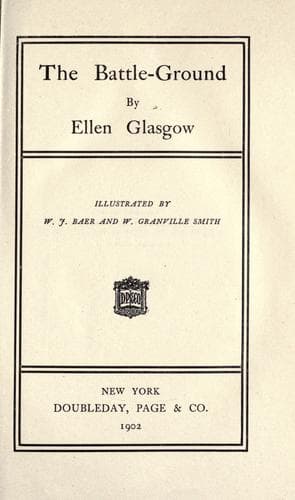
Historical fiction; Southern States -- History -- Fiction; United States -- History -- Civil War, 1861-1865 -- Fiction
During the next few weeks, when Jack was often in the city, an almost
feverish gayety possessed the girl. In the war-time parties, where the
women wore last year's dresses, and the wit served for refreshment, her
gentle beauty became, for a little while, the fashion. The smooth bands of
her hair were copied, the curve of her eyelashes was made the subject of
some verses which _The Examiner_ printed and the English papers quoted
later on. It was a bright and stately society that filled the capital that
year; and on pleasant Sundays when Virginia walked from church, in her
Leghorn bonnet and white ruffles flaring over crinoline as they neared the
ground, men, who had bled on fields of honour for the famous beauties of
the South, would drop their talk to follow her with warming eyes. Cities
might fall and battles might be lost and won, but their joy in a beautiful
woman would endure until a great age.
At last Jack Morson rode away to service, and the girl kept to the quiet
house and worked on the little garments which the child would need in the
summer. She was much alone, but the delicate widow, who had left her couch
to care for the sick and wounded soldiers, would sometimes come and sit
near her while she sewed.
“This is the happiest time--before the child comes,” she said one day, and
added, with the observant eye of mothers, “it will be a boy; there is a
pink lining to the basket.”
“Yes, it will be a boy,” replied Virginia, wistfully.
“I have had six,” pursued the woman, “six sons, and yet I am alone now.
Three are dead, and three are in the army. I am always listening for the
summons that means another grave.” She clasped her thin hands and smiled
the patient smile that chilled Virginia's blood.
“Couldn't you have kept one back?” asked the girl in a whisper.
The woman shook her head. Much brooding had darkened her mind, but there
was a peculiar fervour in her face--an inward light that shone through her
faded eyes.
“Not one--not one,” she answered. “When the South called, I sent the first
two, and when they fell, I sent the others--only the youngest I kept back
at first--he is just seventeen. Then another call came and he begged so
hard I let him go. No, I gave them all gladly--I have kept none back.”
She lowered her eyes and sat smiling at her folded hands. Weakened in body
and broken by many sorrows as she was, with few years before her and those
filled with inevitable suffering, the fire of the South still burned in her
veins, and she gave herself as ardently as she gave her sons. The pity of
it touched Virginia suddenly, and in the midst of her own enthusiasm she
felt the tears upon her lashes. Was not an army invincible, she asked, into
which the women sent their dearest with a smile?
Public-domain text, read in full here on John Shaqi.
Reviews
Reviews
No reviews yet
Be the first to share your thoughts on this work.
Elsewhere in the archive
Join the Discussion
Join the discussion
Sign in to leave a comment or review.
Sign InorCreate an account